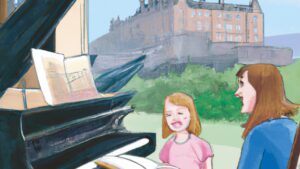
Choosing the right piano teacher in Edinburgh is crucial to ensuring a fulfilling and successful musical journey. Whether you’re a beginner eager to explore the piano for the first time or an experienced player seeking to refine your skills, the right teacher can make all the difference. In this comprehensive guide, we explore the essential factors to consider when selecting a piano teacher in Edinburgh to help you make an informed choice.
Why Choosing the Right Piano Teacher Matters
Selecting a qualified and compatible piano teacher is essential for your progress. The right teacher can provide tailored lessons that align with your goals, fostering motivation and enabling you to reach your full musical potential. A good teacher understands your learning style, adapts lessons to suit your needs, and ensures that learning the piano is enjoyable and fulfilling.
Key Factors to Consider When Choosing a Piano Teacher in Edinburgh
When searching for a piano teacher, it’s important to consider several factors to ensure you’re making the best choice for your musical development. Here’s what to keep in mind:
1. Teacher’s Qualifications and Experience
The qualifications and experience of a piano teacher are key indicators of their ability to teach effectively. Look for teachers with formal music education, such as a degree in music or certification in piano teaching. A teacher with extensive experience can offer valuable insights into technique, music theory, and performance.
It’s also important to consider whether the teacher has experience teaching students of your age group and skill level. Teachers who specialize in beginners might not be the best choice for advanced students, and vice versa. Choose a teacher whose experience aligns with your needs.
Every piano teacher at Morningside School of Musicholds an absolute minimum of a degree in music. Many have masters degrees and even PhDs in music.
2. Teaching Style and Approach
Every teacher has their own unique teaching style, and it’s important to find one that resonates with your learning preferences. Some teachers are more traditional and focus heavily on classical music, while others may incorporate more modern genres, such as pop, jazz, or contemporary music.
When evaluating a teacher’s teaching style, consider the following:
Does the teacher foster a positive and supportive learning environment?
Is their approach flexible and adaptable to different learning speeds?
Are they patient, encouraging, and motivating?
A good piano teacher in Edinburgh will listen to your needs, customise their teaching methodology, and help you feel comfortable and confident at each stage of your learning journey.
3. Availability and Location of Piano Lessons
The convenience of location and scheduling is crucial when selecting a piano teacher. You want to choose a teacher who is located in a convenient area of Edinburgh or offers online lessons if that is more suitable for your lifestyle. Ensure that their availability matches your schedule. A flexible teacher who can accommodate evening or weekend lessons might be ideal if you have a busy work or school schedule.
4. Cost of Piano Lessons
The cost of piano lessons is an important consideration for most students. Rates can vary depending on the teacher’s experience, qualifications, and lesson length. In Edinburgh, piano lesson prices typically range from £45 to £60 per hour. It’s essential to assess the teacher’s rates and find one that fits your budget while still providing quality instruction. A good qualified and experienced teacher will usually charge accordingly.
5. Reputation and Reviews
Checking piano lesson reviews and testimonials from previous students can give you insight into a teacher’s reputation. Look for feedback on platforms like Google, Facebook, or music school websites. Positive reviews often reflect a teacher’s reliability, expertise, and approachability.
Additionally, if the teacher has any affiliations with reputable music schools or professional organizations, this can be a good sign of their commitment to their craft and ongoing professional development.
Morningside School of Music has an excellent reputation which can be verified by the following reviews.
6. Availability of Trial Lessons
Before committing to a series of lessons, it’s wise to ask if the teacher offers a trial lesson. A trial lesson allows you to evaluate the teacher’s approach and assess whether it aligns with your learning style. It also gives you a chance to discuss your goals and expectations to see if the teacher can meet them. Most teachers will offer a payable trial lesson on request. It is not standard practise for experienced, qualified teachers to have to offer their time for free as they are usually very busy.
7. Student-Teacher Compatibility
The student-teacher relationship plays a major role in how effective lessons will be. A teacher who is friendly, approachable, and empathetic will create a comfortable learning atmosphere that fosters growth. It’s important that you feel at ease with your teacher, as this will make it easier to learn and enjoy your lessons.
During the first lesson, observe how the teacher communicates and interacts with you. Are they patient, clear in their instructions, and encouraging? Do they take the time to understand your individual goals? The chemistry between you and the teacher can significantly impact your overall experience.
8. Teaching Methods and Materials
Another critical factor to consider is the teaching methods and materials used by the teacher. Different teachers have different approaches, and some may use specific methods, such as the Suzuki method, Rockschool RSL, or ABRSM (Associated Board of the Royal Schools of Music).
It’s a good idea to ask the teacher about the materials they use for lessons, such as books, exercises, or digital resources. If you are preparing for exams, it’s important that the teacher has experience with exam syllabi and can guide you effectively.
How to Find the Best Piano Teachers in Edinburgh
There are several ways to begin your search for a piano teacher in Edinburgh:
1. Online Directories and Music Schools
Online platforms and music schools are great places to find piano teachers in Edinburgh. Websites like the Google, private lesson directories, or sites dedicated to music instruction often have a list of qualified piano teachers with detailed profiles, including their teaching styles, qualifications, and contact information.
2. Word of Mouth and Personal Recommendations
One of the best ways to find a reputable piano teacher is through recommendations from friends, family, or fellow musicians. Personal referrals provide insight into a teacher’s strengths, and you can ask specific questions about their teaching style and experience.
3. Social Media and Music Forums
Social media groups and online forums dedicated to music education can also be helpful in finding local teachers. Many piano teachers in Edinburgh maintain active social media profiles or Facebook pages where they share their expertise, student achievements, and upcoming events.
4. University or Conservatoire Connections
If you’re a more advanced student, consider looking into piano teachers associated with universities or conservatoires in Edinburgh, such as the University of Edinburgh or the Royal Conservatoire of Scotland. These institutions often have highly qualified teachers who offer private lessons or group classes.
Conclusion
Choosing the right piano teacher in Edinburgh is an important decision that can have a lasting impact on your musical development. By considering factors such as qualifications, experience, teaching style, and cost, you can find a teacher who suits your needs and helps you achieve your musical goals.
Remember to look for someone who is patient, experienced, and willing to adapt their lessons to your personal learning style. With the right teacher, your journey to mastering the piano will be both enjoyable and rewarding.
Morningside School of Music in Edinburgh has offered only the very highest standard of piano lessons for children and adults since 1999. Teaching a whole range of styles from classical through to popular and jazz, lessons are available for complete beginners through to university music students. Why not get in touch with us now to find out how we can help you on your journey to being a piano maestro? Contact us.
As a children’s piano book reviewer, I’m always on the lookout for resources that inspire young learners to take their first steps into the magical world of music. My First Piano Book by Camila Valerio is one such gem that has left me thoroughly impressed.
This beautifully designed piano book is more than just a guide to learning notes and scales—it’s an engaging, interactive journey tailored for children. With its bright illustrations, clear instructions, and playful exercises, this book manages to make the often daunting task of learning the piano feel like an exciting adventure.
A Thoughtful Design for Beginners
The book’s layout is simple yet effective. Each page is carefully structured to avoid overwhelming young learners, focusing on bite-sized lessons that build confidence as children progress. The colorful illustrations and cheerful characters peppered throughout the book are sure to capture kids’ attention, keeping them motivated to turn the page and learn more.
A Gentle Introduction to Music Theory
One of the standout features of My First Piano Book is its approach to teaching music theory. Concepts like notes, rhythm, and tempo are introduced in a way that’s easy to understand, with plenty of visual aids and practical examples. Instead of feeling like a chore, music theory becomes a natural part of the learning process.
Fun, Hands-On Exercises
The book excels in making practice enjoyable. From clapping rhythms to playing simple melodies, children get plenty of opportunities to put what they’ve learned into action. The inclusion of activities that encourage creativity—like composing simple tunes—adds a personal touch, making young learners feel like budding musicians.
Ideal for Parents and Teachers
What I also appreciate about My First Piano Book is its accessibility for adults. Whether you’re a parent with no musical background or a teacher looking for a fresh resource, this book provides clear guidance for supporting children on their piano journey.
Final Thoughts
Camila Valerio has crafted a delightful resource that makes learning piano a joyful experience for children. My First Piano Book is not only educational but also sparks a genuine love for music in young learners. It’s the perfect starting point for any child eager to explore the piano, and I can’t recommend it highly enough.
Whether you’re a parent, a teacher, or someone looking for the perfect gift for a young music enthusiast, this book is a must-have. You can find more about the book here.
The Eventide Riptide represents a significant leap forward in the realm of audio effects processing, designed meticulously for musicians, producers, and sound engineers who demand unparalleled control over their soundscapes. This groundbreaking device boasts exceptional versatility, quickly becoming a staple in both high-end studio environments and dynamic live performance settings. Our comprehensive review delves into the myriad features, outstanding performance, and user-friendly interface of the Riptide, illustrating why it stands out in the competitive market of audio effects processors.
Known for its robust construction and cutting-edge technology, the Riptide offers a plethora of audio effects ranging from ethereal reverb and echo to complex modulation and pitch shifting. Each effect is engineered with precision, allowing for intricate customisation to perfectly match any musical style or creative vision. This device not only enhances audio quality but also fosters creativity, enabling artists to explore new sonic territories with ease.
Furthermore, the Riptide’s intuitive design is tailored for seamless integration into any existing setup, making it an ideal choice for professionals looking for a reliable and efficient audio processing solution. The high-resolution display and straightforward control layout ensure that all adjustments are quick and precise, empowering users to achieve their desired sound without hassle. Whether you’re in the studio tweaking a mix or on stage managing live sound, the Riptide’s performance is consistently reliable and responsive.
In this review, we will explore how the Eventide Riptide’s innovative features make it an indispensable tool for anyone serious about audio production. Stay tuned as we break down its capabilities, discuss its ease of use, and provide real-world applications to demonstrate why the Riptide is a must-have in any audio professional’s arsenal.
graph TD;
    A[Eventide Riptide Interface] --> B[Large High-Resolution Display]
    A --> C[Intuitive Controls]
    A --> D[Clear Visual Feedback]
    C --> E[Quick Adjustments]
    D --> F[Easy Navigation]
Features
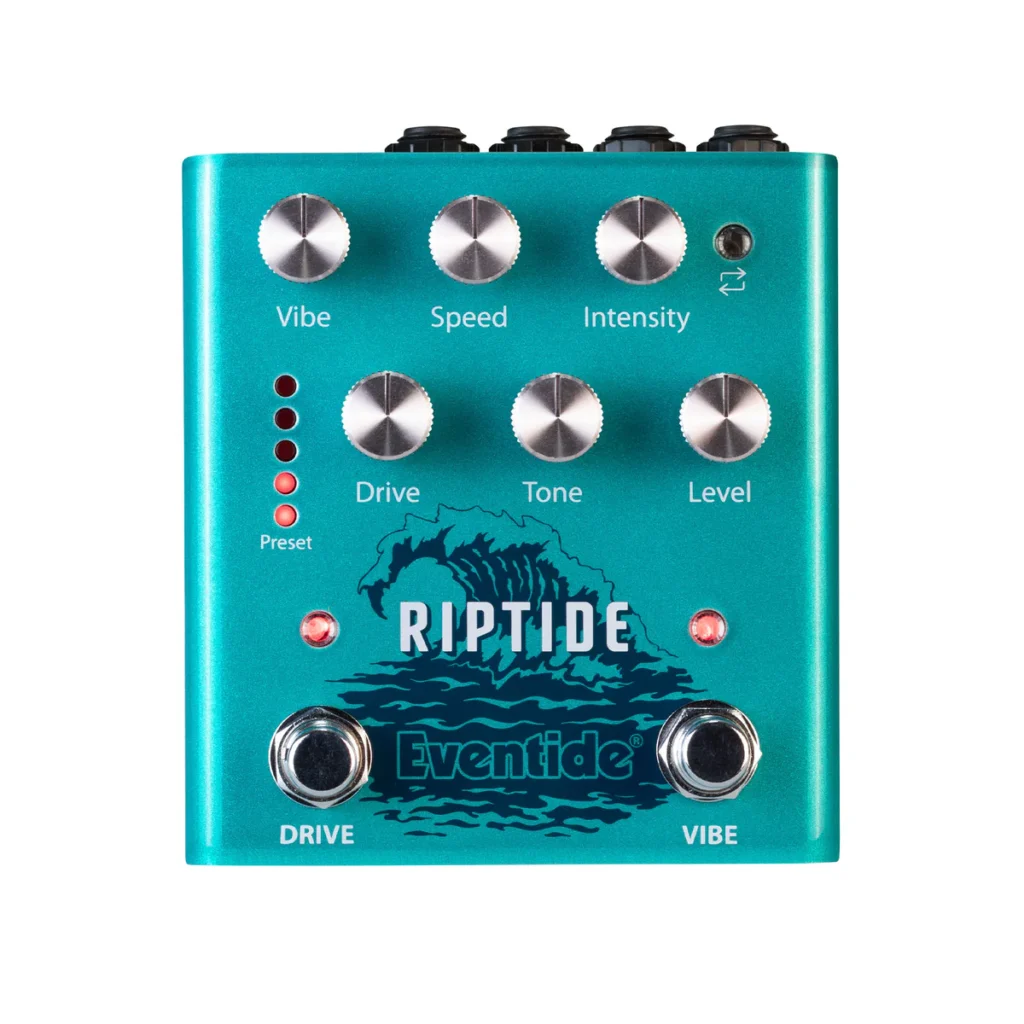
Four Effects: Includes 2 Overdrives and 2 Uni-Vibes
The Riptide provides four distinct effects to enhance your audio output, including two different types of overdrive for adding richness and warmth to your sound and two uni-vibes for creating psychedelic modulation effects. This combination allows for a wide range of tonal diversity, perfect for crafting unique soundscapes.
Instant Switching: Switch between Drive and Vibe at the press of a button
Instant Switching allows users to seamlessly alternate between drive and vibe effects with just a single button press. This feature is crucial for performers who need to transition between different sound settings quickly and effortlessly during live performances.
Simplified Controls: 3 Drive Knobs and 3 Vibe Knobs, no deep dives needed
The simplified control layout includes three knobs each for drive and vibe settings, making it easy to adjust tones without complex menu navigation. This user-friendly interface ensures that both novice and professional users can achieve their desired sounds without extensive technical knowledge.
Preset Management: Five presets accessible via footswitch, with more available through the Eventide Device Manager (EDM) software
Preset management provides immediate access to five user-configurable presets via a footswitch, enhancing live performance flexibility. Additional presets can be managed and accessed through the Eventide Device Manager software, expanding the device’s utility and customisation.
Versatile Footswitch: Dual-action Active Footswitch can be set to latching or momentary mode
The dual-action footswitch on the Riptide offers two operational modes: latching, where the effect stays on until toggled off, and momentary, where the effect is active only while the switch is pressed. This versatility enhances performance dynamics and control over the effects.
Impedance Matching: Rear panel Guitar/Line Level switch for compatibility with guitars, synths, FX loops, or DAW interfaces
The impedance matching feature includes a switch that adjusts the input and output levels to match with guitars, synthesizers, effects loops, and digital audio workstations. This ensures optimal sound quality and prevents signal degradation across various equipment.
Expression Pedal Mapping: Assign any combination of parameters to an Expression Pedal
Expression pedal mapping allows users to assign and control almost any parameter of the Riptide via an expression pedal. This feature provides additional hands-free control, making it ideal for adjusting effects parameters in real-time during live performances.
Auxiliary Switch Support: Use a single Aux switch for Tap Tempo or a triple Aux switch for easy preset changes
The auxiliary switch support enables the use of an external switch to access additional functionalities like tap tempo, which is useful for syncing delay times to the beat of the music, or to facilitate smooth preset transitions.
MIDI Compatibility: Supports MIDI over TRS (with a MIDI to TRS cable Type A or converter box) or USB
MIDI compatibility allows the Riptide to be controlled remotely and integrated into a larger setup using MIDI connections via TRS or USB. This feature is critical for sophisticated setups where synchronisation and preset management are handled through MIDI controllers.
Multiple Bypass Options: Choose from Buffered, Relay, DSP+FX, or Kill Dry
The Riptide offers multiple bypass options to suit different audio setups. Buffered bypass ensures a clean signal with no tone loss in large pedal setups, relay bypass provides the purest audio path, DSP+FX maintains effects tails when bypassed, and Kill Dry is perfect for parallel effect loops.
Catch-Up Mode: Easily dial in your sound when switching between presets or parameters
Catch-Up Mode helps prevent abrupt changes in sound by letting the physical controls ‘catch up’ to the preset values without audio spikes. This is particularly useful during live performances when transitioning between different presets.
Eventide Device Manager: PC or Mac application for software updates, system settings, and creating/saving presets
The Eventide Device Manager is a dedicated software application for both PC and Mac that allows users to update their device firmware, adjust system settings, and create or save custom presets. This tool enhances the Riptide’s functionality and ensures it remains up-to-date with the latest features and improvements.
The Eventide Riptide!
Unmatched Sound Quality
High-Fidelity Processing
The Eventide Riptide excels in high-fidelity audio processing, meticulously preserving and enhancing every nuance of your sound. Its 24-bit/96kHz resolution ensures pristine audio quality, ideal for professional-grade recordings and live performances alike. The device boasts an impressively high signal-to-noise ratio, effectively minimising unwanted noise to deliver a clean, dynamic sound that faithfully reproduces the original audio source.
Whether you’re in a studio environment, capturing intricate details of a musical composition, or performing on stage, where clarity and precision are paramount, the Riptide’s advanced audio processing capabilities ensure exceptional sound reproduction. This meets the highest standards of audio production, making it a favoured choice among audio professionals and enthusiasts alike.
Wide Range of Effects
The Eventide Riptide offers a wide range of effects, including reverb, delay, modulation, and pitch shifting, among others. Each effect is highly customisable to suit different musical genres and styles. The reverb algorithms cover various types, from traditional hall and plate reverbs to experimental spaces, allowing for endless creative possibilities. The Riptide is a versatile tool for both studio production and live performances, providing detailed customisation options and a diverse array of effects. It is a must-have for artists looking to enhance their sound with depth and innovation.
User-Friendly Interface
Intuitive Controls
A standout feature of the Eventide Riptide is its exceptionally user-friendly interface. Carefully designed with the user in mind, it boasts intuitive controls that facilitate swift and effortless adjustments. The interface’s layout promotes seamless navigation, enhanced by a large, high-resolution display that offers clear visual feedback. This combination ensures that users can easily explore and modify the device’s extensive range of settings and parameters with confidence and precision. Whether you’re fine-tuning effects in a studio environment or making real-time adjustments during a live performance, the Riptide’s user-centric interface remains intuitive and responsive, empowering musicians and sound engineers alike to achieve their desired sound effortlessly.
Advanced Connectivity
The Eventide Riptide offers versatile connectivity options, featuring USB, MIDI, and traditional audio inputs and outputs. This extensive array of connections ensures effortless integration into diverse setups, whether you’re working in a studio environment or performing live on stage. The USB port serves dual purposes, facilitating both audio interfacing and firmware updates. This means not only can you connect seamlessly to computers and MIDI controllers but also ensure your Riptide stays current with the latest enhancements and features through convenient firmware updates. This level of connectivity flexibility empowers users to adapt the Riptide to their specific needs, making it a versatile and future-proof solution for professional audio processing requirements.
Performance and Reliability
Robust Build Quality
Crafted from premium materials, the Eventide Riptide is designed to endure the demanding conditions of regular use. Its robust chassis and durable components not only guarantee longevity but also provide a sense of reliability that professionals rely on in critical situations. Whether in the studio or on tour, the Riptide’s sturdy construction ensures consistent performance, maintaining its integrity even under rigorous circumstances. This durability not only safeguards against wear and tear but also instills confidence in users, knowing they can depend on the Riptide’s resilience for years to come. As a trusted companion for musicians, producers, and sound engineers alike, the Riptide stands out as a testament to Eventide’s commitment to quality and reliability in audio processing technology.
Low Latency
In live performance environments, minimising latency is paramount for ensuring seamless and responsive audio processing. The Eventide Riptide sets a new standard with its ultra-low latency processing capabilities, delivering real-time application of audio effects without perceptible delay. This exceptional performance makes it an indispensable tool for live musicians and sound engineers who rely on instantaneous response and precise timing during performances.
By virtually eliminating latency, the Riptide enhances the overall musical experience, allowing performers to confidently execute intricate effects and transitions without disruption. Whether shaping sounds on stage or integrating complex effects into live mixes, the Riptide’s low-latency processing ensures that every musical nuance is faithfully reproduced in real-time. This capability not only enhances the clarity and fidelity of the audio output but also enables seamless integration with other live performance equipment and digital audio workstations (DAWs). As a result, the Riptide empowers performers to deliver exceptional performances with unparalleled reliability and responsiveness, setting a new standard for live audio processing technology.
Designed by audio engineers who have REAL experience with effects.
Creative Potential
Deep Modulation Capabilities
The modulation capabilities of the Eventide Riptide stand out as a highlight of its feature set. Featuring LFOs, envelope followers, and a variety of routing options, this section empowers users to delve into the realm of intricate and evolving sound design. Whether you’re looking to add subtle dynamic movements or explore more dramatic rhythmic transformations, the Riptide offers a wealth of creative possibilities. What sets it apart is the ability to apply modulation to virtually any parameter within its effects chain, providing unprecedented control over the sonic output.
By harnessing these advanced modulation tools, musicians and sound designers can sculpt sounds that evolve over time, responding dynamically to musical nuances and expressive gestures. This flexibility not only enhances the depth and richness of the produced audio but also encourages experimentation and innovation in sound creation. Whether crafting ambient soundscapes, enriching musical textures, or pushing the boundaries of traditional effects, the Riptide’s modulation capabilities ensure that every performance and recording session is infused with unique sonic character and artistic expression. It’s this versatility and precision that make the modulation section of the Riptide a standout feature in the realm of audio effects processors.
Preset Management
The Eventide Riptide impresses with its extensive library of presets, meticulously crafted by acclaimed sound designers. These presets serve as invaluable starting points, offering users immediate access to a wide range of professionally curated sounds. Whether you’re exploring ambient textures or crafting cutting-edge effects, the Riptide’s presets provide a solid foundation for creativity. What truly sets it apart is the ease with which users can tailor these presets to their specific requirements. Each preset is fully customisable, allowing adjustments to parameters like reverb decay, delay timing, and modulation depth, ensuring that every sound can be fine-tuned to perfection.
Moreover, the Riptide empowers musicians and producers by enabling the creation and storage of personalised presets. This feature not only facilitates quick recall of favourite settings but also enhances workflow efficiency during recording sessions or live performances. By seamlessly integrating personal presets alongside factory defaults, users maintain creative momentum without interruptions. Whether adapting to evolving musical arrangements or experimenting with new sonic landscapes, the flexibility of the Riptide’s preset management system ensures that every artistic vision can be realised with precision and ease. This capability makes it an indispensable tool for professionals seeking both versatility and reliability in their audio processing equipment.
Ten Reasons to Buy the Eventide Riptide
High-Fidelity Audio Processing:
Offers 24-bit/96kHz resolution for pristine sound quality, ensuring professional-grade audio for both recordings and live performances.
Extensive Range of Effects:
Features a diverse array of effects, including reverb, delay, modulation, and pitch shifting, allowing for comprehensive sound manipulation.
User-Friendly Interface:
Designed with intuitive controls and a large high-resolution display, making it easy to navigate and adjust settings quickly.
Robust Build Quality:
Constructed with durable materials, the Riptide is built to withstand the demands of frequent use, ensuring longevity and reliability.
Low Latency Performance:
Provides ultra-low latency processing, making it ideal for live performances where real-time audio effects are crucial.
Advanced Connectivity Options:
Equipped with USB, MIDI, and traditional audio inputs/outputs, allowing for seamless integration into any studio or live setup.
Creative Modulation Capabilities:
Features deep modulation options with LFOs and envelope followers, enabling the creation of complex and evolving soundscapes.
Extensive Preset Library:
Comes with a vast library of presets designed by renowned sound designers, and allows for easy customisation and saving of personal presets.
Flexible Footswitch and Pedal Mapping:
Includes a dual-action footswitch and the ability to map parameters to an expression pedal, providing versatile control over your effects.
Eventide Device Manager Support:
Offers access to the Eventide Device Manager for software updates, system settings, and preset management, ensuring the device remains up-to-date with the latest features and improvements.
The Bottom Line
The Eventide Riptide is a state-of-the-art audio effects processor that we believe stands out as a powerful and versatile tool for both studio and live applications. Designed with the discerning professional in mind, the Riptide excels in delivering superior sound quality and an intuitive user experience. In our opinion, it’s a top choice for musicians, producers, and sound engineers alike. At the heart of the Eventide Riptide is its high-fidelity audio processing capability. Boasting a 24-bit/96kHz resolution, the Riptide ensures that every detail of your sound is captured with remarkable clarity and precision. This high-resolution processing preserves the integrity of your audio signal, providing a clean and dynamic output that meets the exacting standards of professional audio production.
Whether you are recording in the studio or performing live, we find that the Riptide’s sound quality remains consistently excellent, delivering a pristine audio experience that truly enhances musical expression. Beyond its unparalleled sound quality, the Eventide Riptide offers an extensive range of effects catering to a wide variety of musical styles and preferences. From lush reverb and intricate delay to dynamic modulation and pitch shifting, the Riptide’s effects are crafted with meticulous attention to detail, allowing for extensive customisation and creative exploration. In our hands-on experience, this device has shown itself to be both versatile and dependable.
The user-friendly interface is another highlight, designed to facilitate quick and easy adjustments. Featuring intuitive controls and a large, high-resolution display, it provides clear visual feedback. This makes navigating through the various settings and parameters a breeze, even in high-pressure environments. We also appreciate the Riptide’s robust build quality, ensuring it can withstand the demands of frequent use. This reliability makes it a trusted companion for any serious musician or sound engineer. With advanced connectivity options including USB, MIDI, and traditional audio inputs/outputs, seamless integration into any setup is guaranteed.
We were particularly impressed by the Riptide’s versatility, which is further enhanced by its support for an expression pedal, auxiliary switches, and MIDI, offering unparalleled control over your effects. Additionally, the Eventide Device Manager software provides an easy way to manage presets, perform updates, and configure system settings, ensuring your Riptide is always optimised for peak performance. Whether in the studio or on stage, the Eventide Riptide offers unmatched creative potential and reliability, making it, in our view, an essential investment for professionals seeking top-tier audio processing capabilities.
Studies supporting music use in educational settings
Types of Calming Classroom Music Suitable for Schools
Classical music
Nature sounds
Ambient and instrumental tracks
Lo-fi beats
Creating a Calming Classroom Playlist
Selecting appropriate tracks
Balancing variety and consistency
Incorporating student preferences
Implementing Music in Daily Classroom Activities
During independent work
For transition times
While students enter and exit the classroom
During relaxation or mindfulness exercises
Teacher and Student Feedback on Classroom Music
Gathering input from students
Adjusting playlists based on feedback
Teacher observations on the impact of music
Challenges and Solutions
Potential distractions
Finding the right volume
Diverse musical tastes
Case Studies
Schools successfully using calming classroom music
Testimonials from educators
Practical Tips for Teachers
Setting up the audio equipment
Managing technical issues
Maintaining a calm environment consistently
Technology and Tools for Classroom Music
Music streaming services
Classroom audio systems
Apps for creating playlists
Integrating Music with Other Calming Techniques
Combining music with aromatherapy
Using music alongside physical activities
Music and meditation
Parental Involvement and Support
Informing parents about the benefits
Encouraging the use of calming music at home
Gathering parental feedback
Future Trends in Classroom Music
Innovations in educational technology
Emerging research on music and learning
Predictions for the next decade
Conclusion
Recap of key points
Final thoughts on the importance of calming classroom music
FAQs
How can I start using music in my classroom?
What are the best music genres for a calming classroom environment?
How loud should the music be?
Can calming music be distracting for some students?
Are there any risks to using music in the classroom?
keeping your classroom calm on the last days of school term could easily be achieved with some relaxing music.
Calming Classroom Music
Creating a peaceful and productive classroom environment is a priority for educators, and one effective strategy is incorporating calming music. The right music can transform a chaotic space into a haven of focus and tranquility. Let’s explore how calming classroom music can benefit students and enhance the learning experience.
Benefits of Calming Classroom Music
Enhances Concentration and Focus
Music with a gentle rhythm and soothing melodies can significantly improve students’ ability to concentrate. The consistent background noise helps drown out distractions, allowing students to zero in on their tasks.
Reduces Stress and Anxiety
A calm classroom atmosphere can alleviate stress and anxiety. Soft music creates a serene environment, which can be particularly beneficial during high-pressure situations like exams or difficult assignments.
Improves Overall Classroom Behaviour
When the atmosphere is calm, students are more likely to exhibit positive behaviours. Music can reduce instances of disruptive actions, fostering a more respectful and cooperative classroom dynamic.
Boosts Academic Performance
Studies have shown that students who study with calming classroom music in the background often perform better academically. The improved focus and reduced stress contribute to a more effective learning process.
Scientific Basis for Music in the Classroom
How Music Affects the Brain
Music stimulates various parts of the brain, including those involved in memory, attention, and emotion. Listening to music can increase the production of dopamine, a neurotransmitter associated with pleasure and motivation.
Studies Supporting Music Use in Educational Settings
Numerous studies highlight the positive impact of music in classrooms. For example, research has found that classical music can enhance spatial-temporal skills, which are crucial for learning subjects like math.
Types of Calming Music Suitable for Classrooms
Classical Music
Pieces by composers like Mozart and Beethoven are popular choices. Their structured compositions provide a predictable and soothing backdrop for learning.
Nature Sounds
Sounds of rain, waves, or birdsong can bring the tranquility of the outdoors inside. These tracks are especially effective for relaxation periods or mindfulness exercises.
Ambient and Instrumental Tracks
These genres offer a modern alternative to classical music, with slow tempos and minimalistic arrangements that are perfect for maintaining focus.
Lo-fi Beats
Lo-fi music combines soft beats with ambient sounds and is particularly popular among younger students. It creates a relaxed atmosphere conducive to both study and creativity.
Creating a Calming Classroom Playlist
Selecting Appropriate Tracks
When curating a playlist, consider the preferences of your students as well as the intended activity. Aim for a mix of genres that promote relaxation and concentration.
Balancing Variety and Consistency
While variety keeps the playlist interesting, consistency helps maintain a stable mood. Rotate tracks regularly but ensure the overall vibe remains calming.
Incorporating Student Preferences
Involve students in the selection process. Their input can help tailor the playlist to the collective taste of the class, increasing its effectiveness.
The last days of school before the summer holidays can be an exciting time for school pupils. This handy blog has some helpful tips that you can implement in your classroom.
Implementing Music in Daily Classroom Activities
During Independent Work
Play music during silent reading or individual assignments to help students maintain focus and reduce ambient noise.
For Transition Times
Music can ease transitions between activities, signalling to students that it’s time to shift gears without causing stress.
While Students Enter and Exit the Classroom
A calming track can set a positive tone at the start of the day and help students wind down as they leave.
During Relaxation or Mindfulness Exercises
Music is a powerful tool for mindfulness practices. It can guide students through breathing exercises or meditation, enhancing the calming effect.
Teacher and Student Feedback on Classroom Music
Gathering Input from Students
Regularly solicit feedback to ensure the music remains effective and enjoyable. Simple surveys or class discussions can provide valuable insights.
Adjusting Playlists Based on Feedback
Be flexible and willing to make changes. If certain tracks are not resonating with the class, replace them with more suitable options.
Teacher Observations on the Impact of Music
Teachers should also monitor the impact of music on classroom dynamics and individual student performance, making adjustments as necessary.
Challenges and Solutions
Potential Distractions
Not all students respond to music in the same way. Some might find it distracting. Address this by allowing quiet time without music when needed.
Finding the Right Volume
Volume is crucial. The music should be audible but not overpowering. Experiment with different levels to find the sweet spot.
Diverse Musical Tastes
Catering to diverse tastes can be challenging. Create a playlist that incorporates a variety of genres while maintaining a calming atmosphere.
Case Studies
Schools Successfully Using Calming Music
Several schools have reported positive outcomes from integrating calming music. For instance, a primary school in California saw improved test scores and better student behaviour after implementing a classroom music program.
Testimonials from Educators
Teachers across different grade levels have shared testimonials highlighting how music has transformed their classrooms. Many note a more peaceful environment and increased student engagement.
Practical Tips for Teachers
Setting Up the Audio Equipment
Ensure you have a reliable sound system that can be easily controlled. Bluetooth speakers or integrated classroom audio systems work well.
Managing Technical Issues
Be prepared for occasional technical hiccups. Have a backup plan, such as a secondary device or a pre-downloaded playlist.
Maintaining a Calm Environment Consistently
Consistency is key. Make calming classroom music a regular part of your classroom routine to maximise its benefits.
Technology and Tools for Calming Classroom Music
Music Streaming Services
Platforms like Spotify and Apple Music offer extensive libraries and curated playlists suitable for the classroom.
Classroom Audio Systems
Invest in good-quality speakers that can fill the room without causing distortion.
Apps for Creating Playlists
Utilise apps that allow you to create and manage playlists easily. This can help you tailor the music selection to specific classroom needs.
Integrating Music with Other Calming Techniques
Combining Music with Aromatherapy
Essential oils like lavender or chamomile, when used with calming music, can enhance the relaxing atmosphere.
Using Music Alongside Physical Activities
Incorporate music into physical activities like yoga or stretching to create a holistic calming experience.
Music and Meditation
Guided meditations with background music can help students practice mindfulness and reduce stress.
Parental Involvement and Support
Informing Parents About the Benefits
Share the positive impacts of calming classroom music with parents through newsletters or meetings.
Encouraging the Use of Calming Classroom Music at Home
Suggest that parents play calming music during homework time to create a consistent atmosphere.
Gathering Parental Feedback
Ask parents for feedback on their children’s behaviour and performance at home, providing a broader perspective on the music’s impact.
Future Trends in Classroom Music
Innovations in Educational Technology
Advances in technology may offer new ways to integrate music into the classroom, such as interactive music tools or personalised playlists.
Emerging Research on Music and Learning
Ongoing research will continue to shed light on how different types of music affect learning and emotional well-being.
Predictions for the Next Decade
Expect to see more schools adopting music programs as part of a comprehensive approach to student wellness and academic success.
Conclusion
Incorporating calming music into the classroom can significantly enhance the learning environment. From reducing stress to improving concentration, the benefits are substantial. By thoughtfully selecting and implementing music, teachers can create a harmonious space conducive to both learning and personal growth.
Have the children in your classroom feeling totally zen!
FAQs
How can I start using music in my classroom?
Begin by selecting a few calming tracks and playing them during quiet activities. Observe the impact and adjust your approach based on student feedback and behaviour.
What are the best music genres for a calming classroom environment?
Classical music, nature sounds, ambient tracks, and lo-fi beats are all excellent choices for creating a calm atmosphere.
How loud should the music be?
The volume should be low enough to not be disruptive but loud enough to be heard clearly. Aim for a background level that students can talk over without raising their voices.
Can calming music be distracting for some students?
Yes, some students may find it distracting. It’s important to be flexible and provide quiet time without music if needed.
Are there any risks to using music in the classroom?
The main risk is potential distraction. However, with careful selection and appropriate volume control, the benefits of calming music typically outweigh the drawbacks.
Embrace the Rhythm: Your Pathway to Becoming a High School Music Teacher in Scotland
[ez-toc]
Inspiring the Next Generation of Musicians
Music is the heartbeat of culture and tradition, an art that speaks where words fail, and as a High School Music Teacher in Scotland, you become the maestro in a symphony of learning and creativity. This guide is your first note in the journey to a fulfilling career, shaping the minds and talents of young students.
What Does a High School Music Teacher Do?
In the dynamic setting of a Scottish secondary school, a music teacher plays many roles:
Educator and Guide: You will teach music theory, introduce various music genres, and foster an appreciation for the art.
Mentor and Leader: Through orchestras, choirs, and bands, you will lead and inspire students in performances that may define their school years.
Innovator and Technologist: Integrating music technology into the curriculum, you’ll prepare students for a digital future in music.
Administrator and Organiser: Beyond teaching, you will be involved in planning, assessments, and organising events that showcase your students’ talents.
What do you need to be a music teacher in Scotland?
Academic Foundations: Pursue a degree in music, ensuring a comprehensive understanding of both theory and practice.
Professional Qualifications: Complete a PGDE (Professional Graduate Diploma in Education) in Music, combining your musical expertise with pedagogical skills.
Continuous Learning: Engage in professional development to stay attuned to the evolving landscape of music education.
What qualifications do I need to be a high school teacher Scotland?
Entering the realm of secondary school music teaching requires specific qualifications and steps. To qualify, you must hold a degree in music (SCQF Level 9-10) alongside a Professional Graduate Diploma in Education (PGDE) at SCQF Level 11. Alternatively, a degree in music and education, such as the BMus Music Education from the University of Aberdeen or the BEd Music from the Royal Conservatoire of Scotland (RCS) at SCQF Level 10, suffices.
Requirements for your degree program include 4-5 Highers, including Music, along with Higher English and National 5 Maths. The University of Aberdeen mandates 4 Highers at ABBB, including English and preferably Music, plus National 5 Maths or Applications or Maths. Similarly, for the BEd Music at RCS, you need 4 Highers at ABBC, with Music at A and English, plus National 5 Maths. Candidates must also attain Grade 8 standard in their main instrument or singing, demonstrating piano proficiency.
Applicants must apply through UCAS Conservatoires by October 1 of the preceding year, with auditions typically scheduled from mid-October onward. A minimum 3-year music study, comprising at least 80 SCQF credit points in music (with 40 at SCQF Level 8 or higher), is mandatory. Upon degree completion, proficiency in both intellectual and practical music skills, including music technology experience, is expected.
For PGDE entry, an approved degree and Higher English plus Maths or Applications of Maths at National 5 (often specified at B) are required. PGDE programs are available at Aberdeen and Edinburgh universities and the Royal Conservatoire of Scotland. Applicants should ideally possess experience working with children or young people and must apply through UCAS.
Successful candidates must undergo a satisfactory criminal record check from Disclosure Scotland. Newly qualified high school music teachers undergo a probationary period to meet the Standard for Full Registration of the General Teaching Council for Scotland (GTC Scotland) before securing a teaching post with a Scottish local authority for a full school year. Candidates aspiring to teach in independent schools may also need to register accordingly.
A Day in the Life of a High School Music Teacher
Your day is as varied as the music you teach:
Morning rehearsals with the school choir.
Interactive theory lessons using the latest educational tech.
After-school program planning with a diverse team of educators.
Individual student mentorship sessions.
Expectations and conditions of secondary music teaching
As a high school music teacher in Scotland, your role encompasses diverse responsibilities and conditions that shape your professional life. Here’s a comprehensive look at the conditions of being a music educator in Scotland:
1. Teaching Environment: Your primary workspace includes classrooms, music rooms, and school theaters, where you impart musical knowledge and skills to students.
2. Working Hours: Expect to adhere to a 35-hour workweek, typically spanning from 9.00am to 3.30pm or 4.00pm. These hours are dedicated to classroom instruction, student engagement, and administrative tasks.
3. Preparation and Marking: Beyond classroom hours, you’ll allocate time for preparation and marking. This crucial aspect of your role ensures that lesson plans are well-crafted and student assessments are effectively evaluated.
4. At-Home Work: Often, you may find yourself engaged in preparation and assessment work at home, especially during evenings or weekends. This additional commitment contributes to the thoroughness and effectiveness of your teaching approach.
5. Holiday Time: Enjoy a total of 13 weeks of holiday each year, a significant aspect of the teaching profession. However, it’s common to utilize some of this holiday time for preparing for the upcoming term’s curriculum and activities.
6. Parent-Teacher Meetings: An integral part of your role involves preparing for and attending parent-teacher meetings. These meetings, usually held in the evenings, provide opportunities to discuss student progress, address concerns, and foster positive relationships with parents and guardians.
7. Mental and Physical Demands: Teaching is inherently demanding, both mentally and physically. As a high school music teacher, you’ll navigate the complexities of student learning, classroom management, and curriculum delivery while maintaining a supportive and engaging learning environment.
Essential Steps to Certification: GTCS Registration and PVG Membership
Before you can be a high school music teacher in a Scottish state school, you must be registered with the General Teaching Council for Scotland (GTCS). This registration is a testament to your qualifications, commitment to ongoing professional development, and adherence to the standards of professional practice. Here’s what you need to know about the process:
Eligibility: After acquiring your degree and PGDE, ensure you meet the GTCS requirements for registration.
Application: Complete the GTCS registration process, which involves providing evidence of your qualifications and fitness to teach.
Professional Development: Engage with a community of educators and resources provided by GTCS to enhance your teaching practice continuously.
Safeguarding Future Generations: PVG Membership
Protecting the welfare of your students is paramount. That’s why obtaining a Protection of Vulnerable Groups (PVG) membership is mandatory. The PVG scheme ensures that those working with vulnerable groups, including children, have no history of harmful behaviour. Here’s how to secure your membership:
Application: Submit a PVG application through Disclosure Scotland.
Clearance: A thorough background check will be conducted to ensure you’re cleared to work with children.
Maintenance: Keep your PVG membership updated, as this is crucial for your continued eligibility to teach.
By completing these vital steps, you solidify your dedication to fostering a safe and thriving learning environment, positioning yourself as a trusted and qualified music educator.
Books that will help you on your journey to become a music teacher
We invite you to join a community where your passion for music ignites the aspirations of young artists and scholars. Your journey begins here, where each day you create a legacy of inspiration and education.
How much do high school music teachers earn Scotland?
Beginning at the NQT/probationary level, teachers ascend the pay scale annually. As of April 1, 2023, the salary span starts at £37,896 and extends to £47,565. Effective January 1, 2024, the salary range will adjust to £38,655 to £48,516. Explore further details on the current pay scales.
For further information, reach out to the following organisations:
Purchasing a high-quality electric guitar can be an essential investment for a musician, as it can significantly impact the sound and playability of their instrument. Here are a few reasons why it can be essential to purchase a high-quality electric guitar:
– Better sound: High-quality electric guitars are generally made with better materials and construction techniques, which can result in a richer, more full-bodied sound. This can be particularly important for musicians who are recording or performing professionally, as a high-quality guitar will be more likely to produce a clear, articulate sound that can be captured effectively by microphones and speakers.
– Improved playability: A high-quality electric guitar will often be more comfortable to play, with a smooth, well-balanced neck and a smooth, responsive fingerboard. This can make it easier for a musician to play the guitar accurately and precisely, particularly when playing at high speeds or performing complex musical passages.
– Higher resale value: High-quality electric guitars are generally made to last and can retain their value over time. This can be important for musicians who may want to sell their guitars in the future, as a high-quality guitar will be more likely to retain its value or even appreciate in value over time.
– Enhanced performance: A high-quality electric guitar can be an important tool for a musician, helping them to deliver the best possible performance and achieve their full potential. Whether playing in a studio or on stage, a high-quality electric guitar can be essential to a musician’s sound and style.
Overall, purchasing a high-quality electric guitar can be an important investment for a musician, as it can significantly impact the sound and playability of their instrument.
*Click on the guitar names for more information from the manufacturer’s website.
Another classic design, the Les Paul is known for its thick, warm tone. It’s a favorite among rock and blues guitarists and has been used by many famous musicians, including Jimmy Page and Slash.
This guitar is known for its exceptional craftsmanship and attention to detail. It has a smooth, polished sound and is often used in jazz, blues, and rock music.
This guitar has a unique, ornate design and is known for its bright, twangy sound. It’s often used in country and rockabilly music and has been played by guitarists such as Eddie Cochran and Duane Eddy.
This guitar has a simple, yet classic design and is known for its bright, twangy sound. It’s often used in country and blues music and has been played by guitarists such as Keith Richards and Bruce Springsteen.
This guitar is known for its fast, thin neck and high-gain pickups, making it a popular choice among metal and hard rock guitarists. It’s also great for fast, technical playing styles.
This guitar has a sleek, modern design and is known for its versatility and ability to handle a wide range of musical genres. It’s often used in rock, metal, and jazz music.
This guitar is known for its fast, thin neck and high-gain pickups, making it a popular choice among metal and hard rock guitarists. It’s also great for fast, technical playing styles.
This guitar offers the same exceptional craftsmanship and attention to detail as the Custom 24, but at a more affordable price point. It has a smooth, polished sound and is great for a wide range of musical genres.
This guitar has a distinctive, double-cutaway design and is known for its fast, thin neck and high-gain pickups. It’s often used in rock and metal music and has been played by guitarists such as Angus Young and Tony Iommi.
10
There are many other great electric guitars out there, but these are some of the best and most iconic ones. No matter what your playing style or preferred genre is, there’s an electric guitar that’s perfect for you.
An extraordinarily keen & gifted young musician, Dan Beattie attended Morningside School of Music throughout 2010 in preparation for his studies in Music at Brunel University, London. Dan was one of the most determined and enthusiastic musicians that Morningside School of Music had encountered, and his attitude towards learning was nothing short of inspirational.
Dan played guitar, piano and was also a great vocalist. He later went on to learn the mandolin and ukulele. He had a particular interest in popular music theory and live music performance. Music was his pride and passion.
Aged only 24, Dan and his younger sister Carly, 21, were tragically involved in a fatal air accident while in Florida.
He will be greatly missed by the staff at the music school who grew very fond of Dan and developed friendships with him.
Morningside School of Music will continue to remember Dan every year through the ‘Dan Beattie Award for the Dedication to Musical Excellence’ which is presented to the student who shows the same high level of determination & dedication that Dan showed throughout his musical training.
The award is presented annually at the Morningside School of Music Grand Annual Charity Ball, by Dan’s father, Mr Tom Beattie.
The award has been presented to:
2019 - Harry Valentine
The teachers at the music school have been completely amazed by Harry's determination to constantly improve his musicianship. Despite only having played the guitar for a few years and still only being in primary school, Harry has proven himself to be a very worthy recipient!
2018 - Katy Martin
We were absolutely blown away by the sheer determination of this year's winner, Katy Martin. A pianist, flautist, composer and vocalist, Katy has be working hard with us for many years whilst still at school.
2017 - Summer Xie
Our youngest recipient of the Dan Beattie award to date, Summer Xie, shows ability on the piano that is past young age. Her level of practice and eye for detail in her work impressed all the staff at Morningside School of Music, none more than her piano teacher.
2016 - Beth Peters
Beth's teachers were so impressed by her impressive vocal ability, they insisted that she be nominated as the 2016 winner of the Dan Beattie Award. Her range, vocal technique and stage presence left the audience cheering to hear more at the Morningside School of Music Grand Annual Ball which was held in aid of SAMH. Beth Continues to study voice with us and is performing live every opportunity she gets.
2015 - Izzy MacLullich
Despite her young age, Izzy is without a doubt one of the most proficient drummers that Morningside School of Music has ever had the pleasure of teaching. At the age of just 12, Izzy was playing through Grade 8 Rockschool Drumming easily, her drum teacher astounded by her incredible aptitude for music. Izzy has gone on to play alongside some of the most famous drummers in the world and even hold her own drum workshops across the UK.
2014 - Conal Mooney
Conal ‘Rockstar’ Mooney, as he is affectionately known at the music school, has proved himself to be a very worthy winner of the Dan Beattie Award. As a multi-instrumentalist who can play piano, bass and drums, Conal received a distinction at Grade 8 Rockschool in his guitar exam. We are very proud of Conal due to the determination he holds when it comes to musicianship. in 2017, Conal enrolled at Edinburgh Napier University on the BA Popular Music degree course where he continues to impress with his virtuoso guitar skills.
2013 - Nikki Lamont
A multi-instrumentalist, singing, playing the guitar, piano and bass, Nikki impressed everyone with her outstanding songwriting skills and her musical aptitude. Nikki has since gone on to study music and graduated with a BA Music degree from Kingston University in 2018.
2012 - Gus Harrower
The second winner of the Dan Beattie Memorial Award was the 14-year-old singer, pianist and guitarist, Angus Harrower. The award ceremony was held at the 2012 Morningside School of Music Annual Dinner which raised over £2,000 for the Sick Kids Friend’s Foundation. The award was presented by Dan’s father, Tom. Since winning the award, Gus has gone on to play, compose, produce and promote his way to Scottish music scene stardom. Gus has been on various TV shows, written about in many newspapers and in 2015, was included in Scotland on Sunday ‘one to watch for 2016’ list. In 2016, Gus enrolled at Edinburgh Napier University on the BA Popular Music degree course.
2011 - Ruiradh Logan
The first-ever recipient of the Dan Beattie Award for Dedication to Musical Excellence. Ruaridh worked extremely hard at Morningside School of Music, in particular, on drums and guitar, dedicating as much free time as possible to the progression of his musical studies. The staff at Morningside School of Music were extremely proud to see Ruaridh lifting the trophy. Since winning the award, he has gone on to perform at various gigs across the Capital and has continued to progress under the watchful eye of his teacher, David Jeans.
Code of Practice – Positive Positive Change within the Music Industry
On the 12th of July 2018, Deborah Annetts, CEO of The Incorporated Society of Musicians, and Naomi Pohl, the Assistant General Secretary of the Musicians Union, signed a joint code of practice that will help eradicate bullying, harassment and discrimination in the music sector. The list of principals will aid all employers within the industry to meet their legal requirements and set out a shared vision of promoting and maintaining a positive working culture.
Morningside School of Music has pledged its full support towards the code of practice.
Deborah Annetts, Chief Executive of the Incorporated Society of Musicians, said:
‘The ISM’s Dignity at work report revealed a culture of discriminatory behaviour, including sexual harassment, bullying and discrimination relating to all protected characteristics across the entire music sector. The respondents, who were mainly self-employed, ‘depping’ musicians (and not covered under the Equality Act 2010), did not report their experiences due to fear of being victimised and ‘blacklisted’, indicates a toxic culture which needs to change.
Following in the footsteps of the British Film Institute and UK Theatre/SOLT, who have both launched vital principles for the film and theatre industries, the ISM and Musicians’ Union have joined forces to launch a set of principles for the music sector. We call on all organisations – whether they are a venue, orchestra, school, recording studio or otherwise, to sign up and support this Code and ensure its implementation within the workspace.’
Naomi Pohl, Assistant General Secretary of the Musicians’ Union, said:
‘When the #MeToo movement began in late 2017, the MU established a confidential email account for musicians and other individuals working in the music sector to report instances of sexism, sexual harassment and abuse. The many reports we have received have been deeply concerning and range from everyday sexism, which appears rife across the industry, to sexual assault. It is clear to us that the culture of the music and entertainment sectors, as well as drama and music education, need to change radically. To put it bluntly, many workplaces simply aren’t safe for female musicians in particular at the present time.
We know that many employers, venues and educational establishments are keen to work with us and we believe this new Code of Practice will be widely welcomed. While it isn’t the only available Code of Practice, it is unique in our sector because it has been drafted with freelance workers, performers and students in mind. Freelancers are particularly vulnerable to abuse as they may feel they have no rights and nowhere to turn for help. We want to ensure they feel supported at work and that we and their engagers have their safety and well-being as our top priority.’
A set of principals to tackle and prevent bullying, harassment and discrimination for all those working in the music sector
These principles aim to eradicate bullying, harassment, discrimination and other forms of inappropriate behaviour within the sector. They will also help employers to meet their legal requirements as well as setting out a shared vision for promoting and maintaining a positive working culture.
All employers, employees, officers, workers, agency workers, trainees, students, tutors, volunteers, trustees and freelancers should adhere to these principles. Everyone is responsible for promoting and maintaining an inclusive workplace which is positive and supportive.
We are committed to promoting and maintaining a diverse and equal working culture
We oppose bullying, harassment and discrimination and will not tolerate such behaviour within our own organisation and network.
We are committed to playing our part in improving the working culture of the music sector.
We are an equal opportunities employer and committed to improving diversity within our own workforce.
We value inclusivity, appreciate difference, and welcome learning from others and consider people equal without prejudice of favour. We build relationships based on mutual respect. We will work to give and receive feedback in a constructive way, which we know will improve creativity and productivity.
We will take a proactive approach to improve the working culture of our own organisation (e.g. ensuring equal opportunities in any recruitment and selection process, providing flexible working policies and family-friendly contracts).
We will encourage appropriate behaviour within our own organisation and in our network.
Where we work with individuals under the age of 18, we will ensure that appropriate safeguarding training and advice is provided to our staff and representatives.
We will implement and promote appropriate policies, procedures and complaints processes to protect everyone – including the freelances we engage and students we teach.
We will respect each other’s dignity, regardless of the seniority of our role in any setting.
When reports are made
We understand that it is difficult for individuals who have suffered bullying, harassment or discrimination to speak out. We will respect confidentiality where possible and aim to make the process of reporting clear, straightforward and accessible.
Reports of bullying, harassment or discrimination made to us will be taken seriously, handled sensitively, and within the complainant’s safety and wellbeing as our first priority. This will mean providing adequate protection for complainants and, where bullying or discrimination is found to have occurred, taking appropriate action against the perpetrators. We will do all in our power to ensure that individuals who have made complaints or participate in good faith in any investigation do not suffer any form of reprisal or victimisation as a result.
Where individuals belong to a trade union or professional association, we will encourage them to seek its advice and support.
We will maintain a list of support services for use by those who have suffered harassment bullying or discrimination.
Where issues are raised with us that may be of a criminal nature, we will refer the individual concerned to an appropriate support service.
We will ensure that these principals are embedded at the early stages of careers in the music sector and the performing arts, to ensure that a safer, more inclusive working culture becomes the norm.
MUSIC SUMMER SCHOOLS FOR 2015 – FOUR WEEKLY COURSES RUNNING
We would like to announce we will be offering music camps at the School this summer! Practice your instrument, form a band, write some hit songs, rehearse, record a demo, and perform a gig!
For more information, or to book a place, please call us on 0131 447 1117.
Dates:
1: Monday the 29th June to Friday the 3rd July 2015
2: Monday the 6th July to the Friday the 10th July 2015
3: Monday the 13th July to Friday the 17th July 2015
4: Monday the 3rd August to Friday the 7th August 2015
Age: 7- 16 Time: 10:00- 15:00 Price: £175, including a packed lunch Location: Morningside School of Music, 138 Comiston Road, Edinburgh
These fun, fantastic courses are suitable for any young adult who has an interest in learning guitar, playing piano, working on drums, having singing tuition, mastering the bass or being a composer. The courses are run by music professionals who have a PVG, NSPCC Child Protection training and British Red Cross First Aid training. The tutors include Professor Paul Boyd, who has worked alongside some of the biggest names in the music industry. Paul has also lectured in universities across the country and worked in primary and high school music education for over 17 years.















 These fun, fantastic courses are suitable for any young adult who has an interest in learning guitar, playing piano, working on drums, having singing tuition, mastering the bass or being a composer. The courses are run by music professionals who have a PVG, NSPCC Child Protection training and British Red Cross First Aid training. The tutors include Professor Paul Boyd, who has worked alongside some of the biggest names in the music industry. Paul has also lectured in universities across the country and worked in primary and high school music education for over 17 years.