Music is an art form that transcends boundaries, cultures, and languages. For those who wish to master this craft, choosing the right university and course is crucial. The world is home to many prestigious music schools, each offering unique programs that cater to different musical interests and career aspirations. In this comprehensive guide, we explore the best music university courses globally, providing detailed insights into their programs, faculty, facilities, and what makes them stand out.
Juilliard School of Music in New York
Juilliard School, USA
Founded in 1905, the Juilliard School in New York City is one of the most prestigious music schools in the world. It offers a wide range of courses, from classical to contemporary music, ensuring students receive a well-rounded education. The school is renowned for its rigorous admissions process, exceptional faculty, and state-of-the-art facilities.
Courses Offered:
Bachelor of Music (BM)
Master of Music (MM)
Doctor of Musical Arts (DMA)
Artist Diploma (AD)
Key Features:
Renowned Faculty: Juilliard boasts a faculty of accomplished musicians and educators who provide personalised mentorship to students.
Performance Opportunities: Students have numerous opportunities to perform in world-class venues, including the Lincoln Center.
Comprehensive Curriculum: The curriculum is designed to develop technical skills, artistic expression, and academic knowledge.
Berklee College of Music in Boston, Massachusetts.
Berklee College of Music, USA
Berklee College of Music, located in Boston, Massachusetts, is synonymous with contemporary music education. Known for its innovative programs and diverse student body, Berklee offers courses that cover various genres, from jazz and rock to electronic music and film scoring.
Courses Offered:
Bachelor of Music (BM)
Master of Music (MM)
Online Degrees and Certificates
Key Features:
State-of-the-Art Facilities: Berklee provides students with cutting-edge studios, performance spaces, and technology.
Industry Connections: The college maintains strong ties with the music industry, offering students opportunities for internships and networking.
Global Campus: Berklee has a campus in Valencia, Spain, providing students with a unique international study experience.
Royal College of Music, UK
The Royal College of Music (RCM) in London is a leading conservatoire that offers an exceptional education in classical music. With a rich history and a commitment to excellence, RCM prepares students for successful careers in music performance, composition, and education.
Courses Offered:
Bachelor of Music (BMus)
Master of Performance (MPerf)
Master of Composition (MComp)
Artist Diploma (ArtDip)
Key Features:
Distinguished Faculty: RCM’s faculty includes some of the most respected musicians and educators in the world.
Performance Excellence: Students have access to numerous performance opportunities in prestigious venues.
Historical Legacy: The college has a storied history of producing world-class musicians.
Conservatoire de Paris, France.
Conservatoire de Paris, France
The Conservatoire de Paris, also known as the Paris Conservatory, is one of the most esteemed music institutions in Europe. It offers a wide range of programs, focusing primarily on classical music education.
Courses Offered:
Diplôme de Formation Supérieure (DFS)
Master’s Programs
Doctoral Programs
Key Features:
Rich Cultural Heritage: Located in the heart of Paris, the conservatory is steeped in French musical tradition.
Renowned Alumni: Many of the world’s greatest musicians have studied at the Conservatoire de Paris.
Comprehensive Training: The conservatory provides extensive training in performance, theory, and musicology.
University of Music and Performing Arts Vienna.
University of Music and Performing Arts Vienna, Austria
Vienna’s University of Music and Performing Arts (MDW) is a premier institution for music education, known for its strong emphasis on both classical and contemporary music. It offers a wide variety of programs aimed at developing the next generation of musicians.
Courses Offered:
Bachelor’s Programs
Master’s Programs
Doctoral Programs
Key Features:
International Reputation: MDW is recognised globally for its excellence in music education.
Diverse Curriculum: The university offers a broad range of courses in performance, composition, conducting, and more.
Cultural Hub: Located in Vienna, a city with a rich musical history, students are immersed in a vibrant cultural scene.
Sibelius Academy, Finland.
Sibelius Academy, Finland
The Sibelius Academy in Helsinki is Finland’s premier music university, offering top-tier education in various musical disciplines. Named after the famous Finnish composer Jean Sibelius, the academy is known for its innovative approach to music education.
Courses Offered:
Bachelor of Music (BM)
Master of Music (MM)
Doctor of Music (DMus)
Key Features:
Cutting-Edge Research: The academy is involved in groundbreaking research in musicology and music education.
Diverse Programs: Offers courses in classical music, jazz, folk music, and music technology.
Collaborative Environment: Encourages collaboration between students and faculty, fostering a dynamic learning atmosphere.
Curtis Institute of Music, Philadelphia.
Curtis Institute of Music, USA
Located in Philadelphia, the Curtis Institute of Music is known for its highly selective admissions process and full-tuition scholarships for all students. Curtis focuses on providing individualised instruction to a small, select group of students.
Courses Offered:
Bachelor of Music (BM)
Master of Music (MM)
Diplomas and Certificates
Key Features:
Selective Admissions: Curtis accepts only the most talented musicians, ensuring a high level of peer collaboration.
Full-Tuition Scholarships: Every student receives a full-tuition scholarship, emphasising merit-based education.
Personalised Instruction: Small class sizes allow for one-on-one mentorship and intensive training.
Tokyo University of the Arts, Japan.
Tokyo University of the Arts, Japan
Tokyo University of the Arts (Tokyo Geidai) is Japan’s leading institution for music and arts education. It offers comprehensive programs that blend traditional Japanese music with Western classical music.
Courses Offered:
Bachelor’s Programs
Master’s Programs
Doctoral Programs
Key Features:
Cultural Integration: Programs integrate traditional Japanese music with contemporary practices.
Renowned Faculty: Faculty members are distinguished artists and educators in their fields.
International Collaboration: The university fosters international partnerships, providing students with global opportunities.
Choosing the Best Music University
Selecting the right music university involves considering several factors, including the institution’s reputation, the quality of its faculty, the range of courses offered, and the opportunities for performance and professional development. It is essential to choose a university that aligns with your musical interests and career goals.
Key Considerations:
Specialisation: Ensure the university offers strong programs in your area of interest, whether it be performance, composition, or music education.
Faculty: Research the faculty members and their areas of expertise. A good mentor can significantly impact your development as a musician.
Facilities: Look for institutions with state-of-the-art facilities, including practice rooms, studios, and performance spaces.
Opportunities: Consider the performance and networking opportunities available to students. Connections in the music industry can be invaluable.
When it comes to caring for musical instruments, few people realize just how much of an impact humidity can have. Whether you’re a professional musician or simply have a collection of cherished instruments at home, controlling the environment is essential to keeping them in top condition. And that’s where dehumidifiers come in.
Why Humidity Matters for Musical Instruments
Humidity control is crucial for preserving musical instruments, as moisture in the air can affect their sound quality, structure, and longevity. Too much humidity can cause materials like wood to swell or warp, while too little humidity may lead to cracks or shrinkage. A balance is essential, especially for sensitive instruments.
Optimal Humidity Levels for Musical Instruments
The ideal humidity range for most musical instruments falls between 40% and 60%. Staying within this range ensures that instruments remain structurally sound and sound their best. This sweet spot helps prevent any drastic expansion or contraction in materials.
How Humidity Affects Different Musical Instruments
String Instruments (Guitars, Violins): Wood is highly sensitive to humidity changes. Excess moisture can lead to swelling and warping, while dry air can cause cracks. Strings may also lose tension.
Woodwind Instruments (Clarinets, Oboes): Woodwind instruments are vulnerable to cracking in low humidity. Excessive moisture can warp wooden instruments and affect playability.
Pianos and Keyboards: High humidity can swell a piano’s wooden components, affecting tone and action. Digital pianos benefit from a stable environment, as humidity fluctuations can affect electronics.
Brass Instruments (Trumpets, Trombones): Though brass instruments are less affected by humidity, the presence of excess moisture can lead to rusting over time.
Signs of Excess Humidity Damage in Musical Instruments
Humidity damage can manifest in various ways. Common signs include warped or swollen wood, tuning instability, mold, and rust. For pianos, a spongy or unresponsive action might indicate moisture issues.
Benefits of Using a Dehumidifier in Your Home Music Space
A dehumidifier can protect your instruments by maintaining consistent humidity levels. It prevents the detrimental effects of excess moisture, preserving the structural integrity, sound quality, and lifespan of each instrument.
Types of Dehumidifiers Suitable for Homes with Musical Instruments
Portable Dehumidifiers: Ideal for smaller spaces, portable dehumidifiers are cost-effective and versatile. They can be moved around as needed, making them suitable for individual rooms.
Whole-House Dehumidifiers: These are great for larger homes or dedicated music rooms. They connect to your HVAC system, maintaining consistent humidity throughout the entire house.
Key Features to Look for in a Dehumidifier for Musical Instruments
When choosing a dehumidifier, look for features that suit the needs of a musical environment:
Adjustable Humidity Controls: Allows you to set a specific humidity level for consistent control.
Quiet Operation: Especially important in music spaces to avoid disruption.
Portability: For smaller spaces, the option to move the dehumidifier around can be beneficial.
Top Dehumidifiers for Homes with Musical Instruments
Pro Breeze 12L/Day: Known for its efficiency and adjustable settings, this model is excellent for mid-sized rooms.
Midea Cube Dehumidifier: Ideal for large spaces, it has a quiet operation and humidity sensor.
If you only need to dehumidify a specific room, portable dehumidifiers can be ideal. Models like the TOSOT 50 Pint and Keystone 35 Pint offer efficient moisture control without taking up too much space.
Whole-House Dehumidifiers for Larger Music Rooms
For larger areas, whole-house dehumidifiers like the Aprilaire 1850 Pro and Honeywell DR90A2000 provide robust, whole-home humidity control. These options are more costly upfront but can save on energy and maintenance over time.
Dehumidifiers with Humidity Sensors and Automatic Shut-Off
Many modern dehumidifiers come with built-in sensors that automatically adjust the settings based on the room’s current humidity level. Models like the Frigidaire FGAC5044W1 include automatic shut-off to prevent over-dehumidifying.
Dehumidifier Maintenance Tips for Optimal Performance
To ensure your dehumidifier works efficiently:
Regularly Empty the Water Tank: Portable models need to have their tanks emptied frequently to avoid overflow.
Clean Filters and Coils: Dust can clog filters, reducing effectiveness.
Keep Vents Clear: Blocked vents can lead to overheating and poor performance.
Additional Tips for Humidity Control Beyond Dehumidifiers
Alongside using a dehumidifier, you can improve humidity control by:
Protecting musical instruments from humidity damage is essential for maintaining their quality and lifespan. Choosing the right dehumidifier, with features tailored to your space, can make a huge difference in your home music environment. Whether you’re a casual player or a seasoned musician, investing in a dehumidifier is a simple but impactful way to preserve the instruments you love.
FAQs
What is the best humidity level for storing musical instruments?
The ideal range is between 40% and 60% to prevent damage from excess dryness or moisture.
Are whole-house dehumidifiers better than portable models for instrument rooms?
Whole-house models are ideal for larger spaces, but portable dehumidifiers work well for small rooms or individual storage areas.
Can I use an air conditioner instead of a dehumidifier?
While air conditioners reduce humidity, they aren’t as effective at maintaining stable levels as a dehumidifier designed for this purpose.
Do brass instruments need humidity control?
Brass instruments are less affected by humidity but can still benefit from controlled environments to prevent rust.
How often should I check my dehumidifier’s humidity levels?
Regularly monitor the settings, especially during seasonal changes, to ensure optimal levels are maintained.
Are you a music teacher looking for work in Edinburgh?
Music possesses an unparalleled ability to touch our souls and transform our lives, making it a powerful tool for personal growth and development. At our music academy, we offer personalized lessons tailored to cultivate resilience, discipline, and a profound sense of accomplishment, whether you’re a beginner or an advanced student. Our experienced instructors are passionate about guiding you on your musical journey, helping you unlock your full potential and reach your goals. As one of our satisfied students, Emily, shares, “The lessons have not only improved my musical skills but have also boosted my confidence in other areas of life.” Start your journey with us today and discover the magic that music can bring to your life!
The Transformative Power of Music
Building Discipline and Resilience
Music education is a gateway to developing discipline and resilience, two essential life skills. The process of learning an instrument or mastering vocal techniques requires consistent practice and dedication. Students quickly learn that progress is achieved not through shortcuts but through sustained effort and perseverance. This journey builds a strong work ethic that extends beyond music, impacting academic and professional pursuits. Moreover, students encounter challenges that test their patience and resolve. Overcoming these hurdles fosters resilience, teaching them to adapt and persist in the face of adversity. As students see their efforts translate into musical improvement, they gain confidence in their ability to tackle life’s challenges. In this way, music becomes more than an art; it becomes a means to forge inner strength and determination. Through personalized lessons, students at our academy are equipped to harness these qualities, empowering them to achieve success in all areas of life.
Fostering a Sense of Accomplishment
Music lessons provide a profound sense of accomplishment as students witness their progress over time. From mastering a challenging piece to performing confidently in front of an audience, each milestone achieved boosts self-esteem and personal satisfaction. This sense of achievement is not only rewarding but also motivating, encouraging students to set and pursue new goals. As they advance, students learn to appreciate the value of setting targets and the fulfillment that comes from reaching them. This principle of goal-setting and achievement is a valuable life lesson that extends beyond music, influencing personal and professional aspirations. Our music academy emphasizes celebrating these victories, no matter how small, to reinforce a positive learning experience. By fostering this sense of accomplishment, we help students build a foundation of confidence and self-worth, empowering them to tackle challenges in all aspects of their lives, with the knowledge that their hard work can lead to success.
Benefits of Music Education
Personal Growth and Development
Engaging with music education plays a crucial role in personal growth and development. It offers a unique blend of cognitive, emotional, and social benefits that contribute to overall well-being. Learning music enhances cognitive functions such as memory, attention, and problem-solving skills. This cognitive engagement stimulates brain development, especially in children, but also provides mental agility for adults. Music education also promotes emotional intelligence by helping students express their feelings and manage stress through creative outlets. Furthermore, participating in group lessons or ensembles fosters social skills, as students learn the importance of collaboration and communication. This holistic approach to learning encourages self-awareness and empathy, which are key components of personal development. At our academy, we focus on nurturing these aspects, ensuring that music education is not just about learning notes, but also about evolving as individuals. Through this journey, students gain insights and life skills that resonate far beyond the music itself.
Emotional and Cognitive Advantages
Music education offers significant emotional and cognitive advantages that enhance both personal and academic growth. Emotionally, music serves as a powerful medium for self-expression, allowing individuals to articulate feelings that may be difficult to verbalize. This expression provides an emotional outlet, reducing stress and promoting mental well-being. Cognitive benefits are equally substantial, as learning music engages both hemispheres of the brain, enhancing memory, concentration, and spatial-temporal skills. Studies have shown that students who participate in music education often exhibit improved academic performance, particularly in areas like mathematics and reading comprehension. The discipline of regular practice also sharpens focus and attention to detail, skills that are transferable to other areas of life. At our academy, we emphasize these dual benefits, encouraging students to embrace music not just for its artistic value, but for its broader impact on emotional health and cognitive abilities. Our approach ensures a well-rounded educational experience that supports lifelong learning and personal fulfillment.
Inspiring Musical Goals
Passionate Instructors and Their Impact
The role of passionate instructors is pivotal in inspiring students to achieve their musical goals. At our academy, instructors are not only experts in their field but also dedicated mentors who understand the unique journey of each student. Their enthusiasm for teaching and music is contagious, motivating students to engage deeply with their lessons. Instructors tailor their teaching methods to suit individual learning styles, ensuring that each student receives personalized guidance. This approach fosters a supportive environment where students feel encouraged to explore their potential and express their creativity. The positive impact of having a passionate instructor extends beyond technical skill acquisition; it cultivates a lifelong appreciation for music and learning. By setting high expectations and providing constructive feedback, instructors challenge students to push their boundaries and achieve excellence. This mentorship is instrumental in helping students realize their aspirations, whether performing on stage, composing original pieces, or simply enjoying playing for personal satisfaction.
Customized Lessons for All Levels
Our academy’s commitment to personalized education is evident in our customized lessons, catering to students of all levels—from beginners to advanced musicians. We understand that each student enters with different backgrounds, goals, and learning paces. To accommodate this diversity, our instructors design lesson plans that align with individual aspirations and skill levels. Beginners are introduced to fundamental concepts at a comfortable pace, fostering confidence and a solid foundation in music theory and practice. Intermediate students receive instruction that challenges them to refine their skills and explore new musical styles. Advanced students are guided towards mastering complex techniques and preparing for professional opportunities. This tailored approach ensures that each student remains engaged and motivated, experiencing steady progress and reaching their musical milestones. By providing such customised instruction, we empower our students to achieve their musical goals, regardless of where they start, and inspire them to pursue lifelong learning and enjoyment of music.
Unleashing Your True Potential
Exploring Various Musical Genres
Exploring various musical genres is a pivotal part of unleashing your true potential as a musician. Exposure to different styles broadens your musical horizons and enriches your understanding of music as an art form. Each genre brings its unique techniques, rhythms, and cultural backgrounds, offering a diverse palette for creative expression. At our academy, we encourage students to step beyond their comfort zones and delve into unfamiliar genres, whether it’s classical, jazz, rock, or world music. This exploration promotes versatility and adaptability, key traits for any aspiring musician. By experimenting with different genres, students discover new preferences and inspirations that can shape their musical identity. Additionally, learning from various genres enhances a student’s ability to collaborate with other musicians, fostering a more comprehensive skill set. Our instructors provide the guidance and resources needed to navigate this exploration, ensuring that every student has the opportunity to experience the rich tapestry of the musical world.
Encouraging Creativity and Expression
Encouraging creativity and expression is at the heart of our music education approach, empowering students to unlock their true potential. Music serves as a powerful medium for self-expression, allowing individuals to convey emotions and ideas in unique and personal ways. At our academy, we emphasize the importance of creativity, encouraging students to compose, improvise, and interpret music in ways that resonate with them. This creative process not only enhances musical skills but also builds confidence and a sense of individuality. We provide a supportive environment where students feel free to experiment and take creative risks without fear of judgment. Our instructors offer guidance and feedback that nurtures originality while respecting each student’s artistic voice. By fostering an atmosphere of exploration and innovation, we help students develop their creative potential, which can lead to a deeper connection with music and a lifelong passion for artistic expression. This focus on creativity ensures a fulfilling and enriching musical journey.
Oasis UK Tour 2025 – Exclusive Oasis Merchandise for Fans
Are you an Oasis fan ready to relive the iconic music and magic of one of the greatest bands in British history? As Oasis embarks on their anticipated UK tour in 2025, now is the perfect time to show your love and loyalty with official Oasis merchandise. Whether you’re looking for T-shirts, posters, vinyl records, or rare memorabilia, we’ve got the best selection for every fan. If you are looking to learn to play ‘Wonderwall’ on guitar in a very short period of time, then Morningside School of Music in Edinburgh is the place to visit for guitar lessons!
Browse our carefully curated list of Oasis gear, click through the links, and get your hands on exclusive items through our trusted Amazon partners. Don’t miss out!
Oasis Be Here Now T-Shirt
Top 10 Must-Have Oasis Merchandise for UK Tour Fans
Here are the hottest Oasis products you can grab to gear up for the 2025 UK tour:
Official Oasis 2025 Tour T-Shirts
Get ready to rock in style with Oasis 2025 tour T-shirts. These high-quality, official tees are perfect for showing off your fandom at concerts or casual outings. Available in multiple sizes and colours. Shop Now on Amazon
Oasis Vinyl Records – A Must for Collectors
Own a piece of music history with Oasis’s classic albums on vinyl. The timeless sound of Liam and Noel Gallagher is best enjoyed in its purest form. From Definitely Maybe to (What’s the Story) Morning Glory?, find them all right here. Shop Now on Amazon
Exclusive Oasis Posters and Wall Art
Bring the iconic Oasis look to your home with stunning posters featuring legendary concert moments, album covers, and rare photography. Perfect for decorating your bedroom or music room. Shop Now on Amazon
Oasis CDs & Box Sets – For Hardcore Fans
For the ultimate collection, grab Oasis box sets that include remastered albums, rare B-sides, and exclusive artwork. A great gift for yourself or a fellow Oasis superfan. Shop Now on Amazon
Oasis Memorabilia – Limited Edition Items
From signed guitars to limited edition items, our Amazon partners offer a range of rare Oasis memorabilia for die-hard fans. Collect these unique pieces to celebrate your love for the band. Shop Now on Amazon
Authenticity Matters
All the products listed are authentic Oasis merchandise sourced directly from trusted sellers on Amazon. You’ll be supporting the band while ensuring that you get high-quality items that last.
Perfect for Gifts
Oasis fans are everywhere, and their merchandise makes for perfect gifts. Whether it’s a birthday, anniversary, or Christmas, Oasis gear is always a hit. Buy now and be early for the Christmas rush, it is guaranteed that Oasis items will be on everyone’s wish list this year in preparation for the 2025 tour.
[amazon box =”B0D9WQDGK4,B085N3JF85,B0BP7RKQQ2″]
Limited Edition Oasis Vinyl
Frequently Asked Questions about Oasis Merchandise
What’s the Best Place to Buy Oasis Merchandise?
Amazon is one of the best places to buy Oasis merchandise because of the vast range of options, fast shipping, and customer protection policies. Plus, you can trust our affiliate links to guide you to authentic products.
How Can I Get Exclusive Oasis Merchandise?
Sign up for Amazon’s notifications on limited-edition Oasis products, and check this page regularly for updates on new releases.
Oasis UK Tour 2025 – Get Ready!
The 2025 Oasis UK Tour is going to be massive, and you’ll want to show up in style with the best Oasis gear. Don’t wait until it’s sold out! Click through our links and secure your merchandise today. By shopping through our affiliate links, you help support our content while getting your hands on the best Oasis merchandise.
Disclosure: This page contains affiliate links. If you make a purchase through these links, we may earn a commission at no additional cost to you. This helps support our site and keeps our content free.
When it comes to mastering the acoustic guitar, the right resources can make a world of difference. Whether you are a beginner looking to strum your first chord or an advanced player aiming to fine-tune your skills, having a good guide is essential. There are countless books available, but not all of them offer the same value. Below, we delve into the best acoustic guitar books that cater to various skill levels and learning preferences.
For those just starting their journey with the acoustic guitar, “Teach Yourself to Play Guitar” by David M. Brewster is an excellent resource. This book provides a straightforward introduction to the basics of guitar playing. It covers essential topics such as tuning, basic chords, and strumming patterns. What makes this book particularly effective for beginners is its simple language and clear instructions, which make the learning process less daunting. Additionally, it comes with visual aids that help to reinforce the lessons, making it easier for beginners to grasp the fundamentals.
Key Features:
Step-by-step lessons
Easy-to-follow instructions
Visual aids and diagrams
Suitable for self-study
2. Guitar Aerobics: A 52-Week, One-Lick-Per-Day Workout Program for Developing, Improving, and Maintaining Guitar Technique by Troy Nelson
For intermediate players looking to improve their technique, “Guitar Aerobics” by Troy Nelson offers a unique and structured approach. This book is designed as a 52-week program that focuses on one lick per day. The exercises in this book are not only about practicing licks but also about improving dexterity, speed, and accuracy. It’s an excellent resource for players who are serious about honing their technical skills and taking their playing to the next level.
Blues is a foundational genre that every guitarist should explore, and “The Complete Guide to Playing Blues Guitar” by Joseph Alexander is one of the best resources for this. This comprehensive book is divided into three volumes: Rhythm Guitar, Melodic Phrasing, and Beyond Pentatonics. It covers everything from basic blues chord progressions to advanced improvisation techniques. The book is well-structured, making it suitable for both beginners and intermediate players who want to dive deep into blues guitar playing.
Key Features:
Three volumes covering different aspects of blues guitar
Suitable for beginners and intermediate players
In-depth coverage of rhythm, phrasing, and improvisation
Includes exercises to develop a unique blues sound
“Hal Leonard Guitar Method” is one of the most popular guitar instruction books globally, and for good reason. Authored by Will Schmid and Greg Koch, this book is part of a series that covers various aspects of guitar playing, from the very basics to more advanced techniques. The method is designed to be comprehensive, covering chords, scales, music theory, and reading music. What sets this book apart is its versatility; it’s suitable for self-study, private lessons, or group classes. It’s an excellent choice for players of all levels.
For advanced players looking for a book that challenges them, “The Advancing Guitarist” by Mick Goodrick is a perfect choice. This book is not your typical guitar method book; it’s more of a guide for players who want to think outside the box and explore new possibilities on the guitar. Goodrick’s approach is less about teaching specific techniques and more about encouraging players to develop their own voice on the instrument. The book covers a wide range of topics, including improvisation, chord voicings, and fingerings, all designed to push the boundaries of conventional guitar playing.
“Zen Guitar” by Philip Toshio Sudo offers a unique perspective on guitar playing by combining the art of guitar with the philosophy of Zen. This book is not about technique or theory; instead, it focuses on the mental and spiritual aspects of being a musician. Sudo’s approach encourages guitarists to find their own path and voice through mindfulness and discipline. It’s a refreshing read for any guitarist looking to connect more deeply with their instrument and music as a whole.
Understanding music theory is crucial for any serious guitarist, and “Music Theory for Guitarists” by Tom Kolb is one of the best books available on the subject. This book breaks down complex music theory concepts into easy-to-understand lessons specifically tailored for guitarists. It covers everything from scales and chords to reading music and understanding key signatures. The book is filled with exercises that help reinforce the theory being taught, making it a practical resource for both beginners and advanced players.
Key Features:
Guitar-specific approach to music theory
Easy-to-understand explanations
Practical exercises for reinforcement
Suitable for beginners to advanced players
8. Fingerstyle Guitar: New Techniques for the Modern Guitarist by Mark Hanson
Fingerstyle guitar is a beautiful and intricate style of playing, and “Fingerstyle Guitar” by Mark Hanson is an excellent guide for those interested in mastering this technique. The book covers various fingerstyle patterns, techniques, and exercises that will help players develop the necessary skills. Hanson’s approach is methodical, starting with basic patterns and gradually moving to more complex arrangements. This book is ideal for intermediate to advanced players who want to expand their repertoire and skill set.
Key Features:
Comprehensive guide to fingerstyle guitar
Methodical approach with progressive lessons
Suitable for intermediate to advanced players
Includes exercises and patterns for practice
Conclusion
Choosing the right acoustic guitar book depends largely on your current skill level and what you hope to achieve as a guitarist. Whether you’re a beginner looking for foundational knowledge, an intermediate player aiming to improve technique, or an advanced guitarist seeking to expand your creativity, the books mentioned above provide a wealth of knowledge and exercises to help you on your journey. Investing in these resources is a step towards becoming a more accomplished and versatile guitar player.
Learning the violin is often regarded as a formidable challenge, especially for beginners. The instrument’s reputation for being difficult stems from its complex mechanics, the precision required, and the time commitment necessary to achieve proficiency. However, with the right mindset, consistent practice, and understanding of the process, learning the violin is an achievable and rewarding journey.
[amazon bestseller =”learn the violin” items=”5″]
Understanding the Basics
The Anatomy of a Violin
Before diving into playing, it’s essential to familiarise yourself with the violin’s anatomy. Understanding the instrument’s components, such as the strings, fingerboard, bridge, and bow, provides a solid foundation for your learning process.
Parts of the Violin
The violin consists of several key parts: the body, neck, fingerboard, pegs, bridge, and strings. Each part has a specific function, contributing to the overall sound and playability of the instrument. Knowing how these parts work together is crucial for maintenance and sound production.
Importance of Knowing Your Instrument
A thorough knowledge of your violin allows you to troubleshoot common issues, make adjustments for better sound quality, and understand the physical aspects of playing, such as how different strings produce different tones.
How difficult is it to learn to play the violin as an adult?
Holding the Violin and Bow
Properly holding the violin and bow is a fundamental skill that impacts your ability to play comfortably and produce a good sound.
Proper Posture
Posture plays a significant role in violin playing. A relaxed yet firm stance, with the violin resting comfortably between your shoulder and chin, is essential. Poor posture can lead to discomfort and hinder your ability to play for extended periods.
Bow Grip Technique
The way you hold the bow affects the control and quality of the sound. A proper bow grip involves a balance between firmness and flexibility, allowing you to produce a clear and resonant tone.
Producing Your First Sound
Making your first sound on the violin is an exciting milestone. The technique you use, whether bowing or plucking, sets the stage for future development.
Bowing Techniques
Bowing is a primary method of producing sound on the violin. Learning to move the bow smoothly across the strings while maintaining consistent pressure and speed is crucial for creating a pleasant tone.
Plucking (Pizzicato) Method
Pizzicato, or plucking the strings, is another way to produce sound. This technique is often used in certain musical pieces and helps beginners understand string tension and tone production.
[amazon bestseller =”Beginner Violins” items=”3″]
The Initial Challenges
Coordination and Dexterity
Playing the violin requires a high level of coordination between your left hand, which handles the fingerboard, and your right hand, which controls the bow. Building this coordination is one of the initial hurdles for beginners.
Ear Training
Developing a good ear for music is essential for playing the violin. This skill allows you to recognise and correct pitch discrepancies, leading to more accurate playing.
Developing Pitch Accuracy
Pitch accuracy is critical when learning the violin. Unlike fretted instruments, the violin requires precise finger placement to produce the correct notes. Ear training helps you internalise the sound of each note, aiding in correct finger placement.
Reading Music
Reading sheet music is a skill that enhances your ability to learn new pieces and understand musical structure.
Understanding Notation
Learning to read music notation, including notes, rests, and dynamics, is essential for any violinist. This knowledge allows you to translate written music into physical playing.
Transitioning from Theory to Practice
Applying what you’ve learned from music theory to your instrument can be challenging. Regular practice bridges the gap between knowing what to do and actually doing it.
Building Muscle Memory
Muscle memory is developed through repetitive practice, allowing you to play notes and passages automatically without conscious effort. This is especially important for complex pieces where speed and accuracy are required.
The Importance of Consistent Practice
Establishing a Practice Routine
A structured practice routine is vital for steady progress. Consistency is key to mastering the violin, as each session builds upon the last.
Frequency and Duration
How often and how long you practice directly impacts your progress. Daily practice, even if brief, is more effective than sporadic, longer sessions.
Setting Achievable Goals
Setting small, attainable goals keeps you motivated and allows you to track your progress. These goals might include mastering a specific technique or learning a new piece.
Overcoming Frustration
Frustration is a common part of learning any instrument, and the violin is no exception. Knowing how to manage this frustration is essential for long-term success.
Mental Blocks
Mental blocks can occur when you hit a plateau or struggle with a particular technique. Breaking tasks into smaller steps and taking breaks can help overcome these challenges.
Physical Fatigue
Playing the violin can be physically demanding, especially on the hands and arms. Regular breaks and proper technique help prevent injury and fatigue.
Learn how to play the violin as an adult
Progressing Beyond the Basics
Mastering Intermediate Techniques
Once you’ve mastered the basics, it’s time to tackle more advanced techniques that add depth and expression to your playing.
Vibrato
Vibrato involves a slight oscillation of pitch, adding warmth and emotion to the sound. It’s a technique that requires patience and practice to master.
Shifting Positions
Shifting involves moving your left hand up and down the fingerboard to reach higher or lower notes. This skill expands your range and allows you to play more complex music.
Expanding Repertoire
Learning a variety of pieces not only makes practice more enjoyable but also exposes you to different styles and techniques.
Classical Pieces
Classical music is the backbone of violin repertoire. Starting with simple pieces and gradually working your way up to more challenging works is a common approach.
Modern and Folk Tunes
In addition to classical music, exploring modern and folk tunes can provide variety and help you apply your skills in different contexts.
Playing in Ensembles
Playing with others is a valuable experience that helps develop timing, listening skills, and the ability to blend with other instruments.
Chamber Music
Chamber music involves playing in small groups, such as duets, trios, or quartets. This setting allows for intimate musical exchanges and challenges your ability to listen and respond to others.
Orchestras and Bands
Joining an orchestra or band provides a broader experience, requiring you to follow a conductor and synchronize with a larger group of musicians.
Advanced Violin Mastery
Perfecting Intonation
Intonation refers to the accuracy of your pitch. At advanced levels, even slight deviations in pitch become noticeable, making intonation a key area of focus.
Advanced Bowing Techniques
Advanced bowing techniques add complexity and nuance to your playing.
Spiccato
Spiccato is a bowing technique where the bow bounces lightly on the string, producing a crisp, articulated sound. It requires precise control and timing.
Sautillé
Sautillé is a faster, more delicate bouncing bow technique that adds sparkle and lightness to your playing. Mastering this requires advanced bow control.
Emotional Expression
At the highest levels, violin playing becomes more about expressing emotion and interpreting the music than just playing the notes.
Interpretation of Music
Interpreting music involves understanding the composer’s intentions and adding your personal touch to the performance. This skill develops over time and with experience.
Stage Presence
Stage presence is about more than just playing the violin; it’s about engaging with your audience and delivering a compelling performance. Confidence, poise, and expression all contribute to a memorable stage presence.
Common Myths About Learning the Violin
“You Have to Start Young”
While it’s true that many great violinists start young, it’s never too late to learn the violin. Adults can achieve high levels of proficiency with dedication and practice.
“The Violin Is the Hardest Instrument to Learn”
The violin is challenging, but whether it’s the hardest instrument is subjective. Every instrument has its difficulties, and the key is finding enjoyment in the learning process.
“Self-Teaching Isn’t Effective”
While having a teacher is beneficial, self-teaching can be effective with the right resources and dedication. Many great musicians have been largely self-taught.
Conclusion
Learning the violin is undoubtedly a challenging endeavour, but it’s also one of the most rewarding. The key to overcoming the difficulties lies in consistent practice, a solid understanding of the basics, and a passion for music. Whether you’re just starting or looking to refine your skills, the journey of learning the violin is one that can bring a lifetime of joy and fulfilment.
[amazon box =”B0B14862FF”]
FAQs
How long does it take to learn the violin?
The time it takes to learn the violin varies widely depending on factors like practice time, prior musical experience, and individual aptitude. However, most learners can expect to reach a basic level of proficiency within 1-2 years of consistent practice.
Can adults learn the violin?
Absolutely! Adults can learn the violin with the same success as children. The key is a commitment to regular practice and a willingness to embrace the learning process.
Is it necessary to have a teacher?
While having a teacher can significantly accelerate your progress and ensure you’re learning proper techniques, it’s possible to learn the violin on your own with the right resources and discipline.
What is the best age to start learning the violin?
There’s no “best” age to start learning the violin. While many start as children, adults can also begin learning at any age and still achieve a high level of proficiency.
How much daily practice is required to progress?
Consistency is more important than duration. Even 20-30 minutes of focused practice each day can lead to steady progress. As you advance, you might find longer sessions beneficial.
The Ultimate Guide to Choosing the Best Beginner Guitar
So, you’ve decided to pick up the guitar, huh? That’s awesome! But before you start strumming away, you’ve got to find the right guitar to kick off your musical journey. Don’t worry; I’ve got your back. In this guide, we’ll break down everything you need to know about choosing the best beginner guitar, step by step.
Why Choosing the Right Beginner Guitar Matters
Starting with the right guitar can make or break your learning experience. Think of it like this: Would you run a marathon in flip-flops? Probably not. The same goes for playing guitar—you need the right tools to succeed. Having proper guitar lessons will help greatly also.
Acoustic guitars are the go-to for many beginners. Why? Because they’re simple, portable, and don’t require an amp. You can take them anywhere and start playing without worrying about cables or power sources.
Electric guitars, on the other hand, require an amp but offer a wider range of sounds. They’re perfect if you’re into rock, blues, or metal. Plus, they’re easier on your fingers since the strings are usually lighter.
Which One Should You Choose?
If you’re into folk, country, or singer-songwriter vibes, an acoustic guitar might be your best bet. If you’re dreaming of shredding like your favourite rock stars, go for an electric.
Size Matters: Finding the Right Guitar Size
Why Guitar Size is Important
Guitars come in different sizes, and picking the right one is crucial, especially for beginners. A guitar that’s too big or too small can make learning harder than it needs to be.
A good rule of thumb is to hold the guitar and see if you can comfortably reach the frets and strum the strings. If it feels awkward, try a different size.
Understanding Guitar Strings
Steel Strings vs. Nylon Strings
Steel Strings: Found on most acoustic and electric guitars, these are great for rock, pop, and country.
Nylon Strings: Typically found on classical guitars, these are softer on the fingers and better for classical and flamenco music.
Which One is Better for Beginners?
Steel strings are popular, but they can be tough on your fingers when you’re just starting out. Nylon strings are gentler, making them a good choice for beginners.
Budgeting: How Much Should You Spend on a Beginner Guitar?
Entry-Level Guitars
You don’t need to break the bank to get started. There are plenty of budget-friendly options that sound great and will last you a long time.
Mid-Range Guitars
If you’re serious about learning and have a bit more to spend, consider a mid-range guitar. They often have better build quality and sound.
Should You Buy New or Used?
Buying used can save you money, but be careful. Make sure the guitar is in good condition, with no cracks or major wear and tear.
If you want something unique, check out Martin Smith guitars. They offer a blend of traditional craftsmanship with modern features, perfect for beginners looking to stand out.
For something unique, the Martin Smith W-100 offers a blend of modern features and classic style, making it perfect for beginners looking to make a statement.
A budget-friendly electric guitar with a sleek design and easy playability.
Final Thoughts: Your Guitar Journey Starts Here
Choosing the right beginner guitar is the first step on your musical journey. Whether you go for an acoustic or electric, full-size or half-size, what matters most is that you start playing and enjoying the process. Remember, every guitar hero started where you are right now—so pick up that guitar, start strumming, and let the music take you wherever you want to go!
FAQs
1. What’s the best type of guitar for beginners?
Both acoustic and electric guitars are great for beginners. It depends on your musical preferences—acoustic for simplicity, electric for variety.
2. Do I need to buy an expensive guitar to start learning?
No, there are plenty of affordable options that are perfect for beginners. Focus on finding a guitar that’s comfortable and sounds good to you.
3. How often should I change guitar strings?
It depends on how often you play, but generally, every 3-6 months is a good rule of thumb.
4. Can kids start learning guitar on a full-size model?
It’s better for kids to start with a smaller guitar, like a ¾ or half-size, to make learning easier and more comfortable.
5. What’s the easiest way to learn guitar?
Start with basic chords and simple songs. Online tutorials, apps, and lessons with a teacher can also help guide you along the way.
As musicians, we understand the importance of finding the perfect guitar amplifier to shape and enhance our sound. The right amp can elevate your music to new heights, offering clarity, warmth, and the necessary punch for any setting. In this comprehensive guide, we delve into the best guitar amps of 2024, covering a variety of options that cater to all playing styles and performance needs.
The Evolution of Guitar Amplifiers in 2024
The landscape of guitar amplifiers has evolved rapidly, with manufacturers integrating cutting-edge technology to meet the diverse needs of modern guitarists when choosing the best budget guitar amps. This year, we’ve seen significant advancements in digital modeling, tube amplifier innovations, and hybrid designs that offer the best of both worlds. Whether you’re a seasoned professional or an aspiring guitarist, the amps of 2024 deliver unprecedented tonal flexibility, durability, and portability.
What Are The Best Guitar Amps of 2024? A Detailed Overview
The Fender Tonemaster Deluxe Reverb Guitar Amplifier.
Type: Digital Modeling Power: 22 Watts Speaker Configuration: 1×12″ Celestion Key Features: Lightweight, Built-in attenuator, Authentic tube tone simulation
The Fender Tonemaster Deluxe Reverb sets a new benchmark in digital modeling amplifiers. It replicates the legendary tone of Fender’s tube amps while offering the convenience of a lightweight design and advanced digital features. This amp is perfect for those seeking versatility without sacrificing the warmth and dynamics of traditional tube amps. With a built-in attenuator, you can dial in the perfect sound for any venue, from small clubs to large arenas.
Marshall continues to dominate the amplifier market with the Origin 20 Combo, a versatile tube amp that offers both classic and modern tones. The dual-channel design allows for seamless switching between clean and overdriven sounds, making it ideal for a wide range of genres. Its compact size and reverb feature make it a go-to choice for gigging musicians who demand reliable performance and tonal richness.
The Boss KTN-ART2 Katana Artist Mkii Guitar Combo Amplifier, 100W 1 X 12
Type: Solid State Power: 100 Watts Speaker Configuration: 1×12″ Custom Waza Key Features: Five distinct amp characters, Integrated effects, MIDI control
The Boss Katana Artist MkII continues to impress with its robust solid-state construction and unparalleled versatility. This amp is a powerhouse, featuring five unique amp characters that cover everything from shimmering cleans to high-gain distortion. The integrated effects and MIDI control expand its capabilities, making it a favourite among guitarists who need a reliable workhorse for both studio, stage and best guitar amps for home use.
Type: Tube Power: 100 Watts Speaker Configuration: No speaker, head unit only Key Features: High-gain, Spring reverb, FX loop
Orange amplifiers have long been celebrated for their distinctive sound, and the Rockerverb 1000 MKIII is no exception. This amp delivers lush, high-gain tones with a rich, harmonically complex overdrive that’s perfect for rock and metal genres. The spring reverb and FX loop add to its versatility, allowing for creative sound shaping in any setting. We think this is one of the best guitar amps.
Type: Digital Modeling Power: 10 Watts Speaker Configuration: Head unit only Key Features: Wireless connectivity, Bluetooth, Built-in rechargeable battery
The Yamaha GTHR5UK is the ultimate practice amp for guitarists on the go. Despite its compact size, it offers an impressive range of tones, thanks to Yamaha’s VCM technology. The wireless connectivity and built-in rechargeable battery make it incredibly convenient, allowing you to practice or perform anywhere without the hassle of cables. This has to be one of the best beginner guitar amps on the market.
The Vox Valvetronix VT40x Modeling Guitar Amplifier.
Type: Modeling Power: 40 Watts Speaker Configuration: 2×12″ Celestion Alnico Blue Key Features: Top boost channel, Tremolo, Classic chime
If you are wondering what’s the best budget guitar amp? The Vox Valvetronix VT40X remains an iconic choice for guitarists seeking the classic British chime and best affordable guitar amps. This amp’s top boost channel is renowned for its bright, articulate tones, making it a staple in genres like rock, pop, and indie. The tremolo feature and durable construction further solidify its status as a legendary amplifier that continues to inspire musicians worldwide.
How to Choose the Right Guitar Amp in 2024
When selecting a guitar amp, consider the following factors:
Power and Wattage
Home Practice: Amps with 10-30 watts are ideal for home use, offering enough volume without disturbing the neighbours.
Gigs and Performances: For live performances, consider amps with at least 40 watts to ensure your sound cuts through the mix.
Type of Amplifier
Tube Amps: Known for their warm, natural sound and dynamic response. Ideal for players who prioritise tone.
Solid State Amps: More reliable and often lighter than tube amps, offering consistent performance at a lower cost.
Digital Modeling Amps: Provide a wide range of tones and effects, perfect for versatile players who need multiple sounds.
Portability
Combo Amps: These are all-in-one units that combine the amp head and speaker in a single enclosure, making them easy to transport.
Amp Heads and Cabinets: Offers more flexibility in customising your setup, but may require more space and effort to transport.
Built-in Effects and Features
Look for amps with built-in effects like reverb, delay, and modulation, which can enhance your sound without needing additional pedals.
Connectivity: Amps with USB or Bluetooth connectivity allow for easy recording and playing along with backing tracks.
Music has an extraordinary power to evoke emotions, transcend boundaries, and connect people across cultures and generations. For those who love music, books offer a deep dive into the lives of musicians, the history of various genres, and the cultural impact of melodies that have shaped societies. Whether you’re a fan of classical symphonies, rock anthems, or jazz improvisations, there’s a book out there that resonates with your musical soul. This article explores the top must-read books for music lovers, providing a comprehensive list that caters to a wide range of musical tastes.
Nick Hornby’s High Fidelity is a quintessential read for anyone who has ever been obsessed with music. The protagonist, Rob Fleming, is a record store owner who measures his life in the songs that have accompanied his experiences. This novel dives into the complexities of relationships, self-reflection, and the comforting yet sometimes haunting power of music. Hornby’s witty and insightful prose captures the essence of what it means to be truly passionate about music, making it a must-read for any audiophile.
Just Kids by Patti Smith is not just an autobiography; it’s a poetic narrative of her early years in New York City and her close relationship with photographer Robert Mapplethorpe. Smith’s lyrical style, which mirrors her musical prowess, provides a vivid portrayal of the 1960s and 70s cultural scene. This book is a love letter to art, music, and the enduring friendship that shaped both her and Mapplethorpe’s careers. For anyone interested in the intersections of music, art, and personal growth, Just Kids is an essential read.
Keith Richards, the legendary guitarist of The Rolling Stones, offers an unfiltered look into his life in his autobiography, Life. This book is a treasure trove of anecdotes, from Richards’ early days growing up in post-war England to his rise to rock and roll stardom. His candid reflections on his struggles with addiction, his relationships within the band, and his undying love for music provide a raw and honest portrait of one of rock’s most enduring figures. Life is not just a memoir; it’s a piece of rock history.
Bruce Springsteen’s autobiography, Born to Run, is as powerful and poignant as his music. Springsteen takes readers on a journey through his humble beginnings in New Jersey, his rise to fame, and the emotional highs and lows that have influenced his iconic songs. The narrative is infused with the same passion and energy that Springsteen brings to his performances, making this book a compelling read for any fan of his work or rock music in general.
Bob Dylan, a Nobel laureate and one of the most influential songwriters of the 20th century, offers readers a glimpse into his creative process in Chronicles: Volume One. This memoir is not a straightforward autobiography but rather a series of snapshots from different periods in Dylan’s life. The book is rich with details about his early career, his thoughts on songwriting, and the cultural shifts that have shaped his music. Dylan’s unique voice and poetic style make Chronicles a fascinating read for anyone interested in the art of songwriting and the history of American music.
For those with a keen interest in classical music, The Rest Is Noise by Alex Ross is an essential read. This book offers a detailed exploration of 20th-century music, delving into the works of composers such as Strauss, Stravinsky, and Shostakovich. Ross examines how historical events, politics, and cultural changes influenced the development of classical music during this period. The Rest Is Noise is not just a history book; it’s an invitation to listen to the music of the last century with a deeper understanding and appreciation.
Punk rock revolutionised music in the 1970s, and Please Kill Me captures the raw energy and rebellious spirit of the movement. This book is an oral history, told through the voices of those who lived it, including members of The Ramones, Iggy Pop, and Patti Smith. McNeil and McCain compile these firsthand accounts to create a vivid and unflinching narrative of punk’s rise and its impact on the music industry. For anyone interested in the origins of punk and its lasting influence, Please Kill Me is an indispensable read.
This Is Your Brain on Music by Daniel J. Levitin offers a unique perspective on music by blending psychology, neuroscience, and music theory. Levitin, a neuroscientist and musician, explores how music affects our brains, why certain songs trigger emotional responses, and how our musical preferences are formed. This book is a must-read for those who want to understand the science behind their love for music and how it shapes our cognitive and emotional lives.
Kim Gordon, co-founder of the influential rock band Sonic Youth, shares her life story in Girl in a Band. This memoir delves into Gordon’s experiences in the male-dominated music industry, her creative process, and her personal life, including her marriage and eventual divorce from bandmate Thurston Moore. Gordon’s voice is introspective and candid, offering readers a rare glimpse into the life of one of rock’s pioneering women. Girl in a Band is an empowering read for anyone interested in the intersection of music, art, and feminism.
Love Is a Mixtape by Rob Sheffield is a heart-wrenching memoir that uses music as a lens to explore love and loss. Sheffield, a music journalist, recounts his relationship with his late wife through the mixtapes they shared. Each chapter is anchored by a different mixtape, weaving together memories of their life together with reflections on the songs that defined their relationship. This book is a poignant reminder of how music can encapsulate our most profound experiences and emotions.
Led Zeppelin is one of the most iconic rock bands in history, and Hammer of the Gods by Stephen Davis provides an in-depth look at their meteoric rise and tumultuous career. This biography covers the band’s formation, their groundbreaking albums, and the controversies that surrounded them, from wild tours to the tragic death of drummer John Bonham. Davis’ account is detailed and immersive, making it a must-read for any Led Zeppelin fan or rock enthusiast.
Mötley Crüe’s The Dirt is not for the faint-hearted. This autobiography, co-written by the band members and Neil Strauss, lays bare the excesses, scandals, and raw ambition that characterised the band’s journey to stardom. From tales of debauchery to moments of introspection, The Dirt is an unflinching look at the highs and lows of rock and roll life. It’s a gripping read for anyone fascinated by the darker side of the music industry.
The world of rock music is filled with legendary instruments that have shaped the sound and culture of generations. Among these, certain guitars stand out not only for their unique sound but also for their significant role in music history. This article delves into the stories behind some of the top 20 guitars in the world celebrating their contributions to the world of music.
Eric Clapton’s ‘Blackie’.
1. Eric Clapton’s “Blackie”
Eric Clapton’s “Blackie” is one of the most famous guitars in rock history. This Fender Stratocaster was pieced together by Clapton himself from three different Stratocasters he bought in Nashville. Clapton played “Blackie” from 1970 to 1985, and it became his main instrument during this period. The guitar is renowned for its distinctive sound and its role in Clapton’s performances and recordings, including the iconic “Layla” and “Wonderful Tonight.”
The Creation of Blackie
Clapton’s decision to create “Blackie” came after he fell in love with the sound of the Fender Stratocaster. He bought six vintage Strats for $100 each and gave three away to friends, including George Harrison, Pete Townshend, and Steve Winwood. The remaining three were used to build “Blackie.” The guitar’s body and neck were from different years, which contributed to its unique sound.
Blackie’s Legacy
In 2004, Clapton auctioned “Blackie” to raise funds for his Crossroads Centre, a drug and alcohol rehabilitation centre. The guitar sold for $959,500, setting a new record at the time for the most expensive guitar sold at auction. “Blackie” remains a symbol of Clapton’s career and his influence on rock music.
The Jimi Hendrix Monterey Strat.
2. Jimi Hendrix’s Monterey Stratocaster
Jimi Hendrix‘s performance at the Monterey Pop Festival in 1967 is one of the most legendary moments in rock history. Hendrix closed his set by setting his Fender Stratocaster on fire, creating an unforgettable image that encapsulated the spirit of the era.
The Monterey Performance
Hendrix’s Monterey Stratocaster was painted with psychedelic designs, reflecting the vibrant culture of the 1960s. The guitar’s sacrificial end was a statement of Hendrix’s theatrical performance style and his innovative approach to music. The burnt remains of the guitar are now preserved, serving as a testament to Hendrix’s explosive impact on the music world.
Cultural Impact
The Monterey Stratocaster is often cited as one of the most famous guitars because of the bold statement it represented. Hendrix’s performance at Monterey helped solidify his reputation as one of the greatest guitarists of all time, and the image of him setting his guitar on fire has become an iconic symbol of rock and roll rebellion.
Jimmy Page’s ‘Number One’.
3. Jimmy Page’s “Number One” Les Paul
Jimmy Page, the legendary guitarist of Led Zeppelin, is known for his mastery of the Gibson Les Paul. His most famous guitar, known as “Number One,” is a 1959 Gibson Les Paul Standard. This instrument is revered for its rich tone and its role in creating some of rock’s most memorable riffs.
The Acquisition of Number One
Page acquired “Number One” in 1969 from Joe Walsh of the Eagles. The guitar quickly became his main instrument and was used extensively during Led Zeppelin’s rise to fame. “Number One” is known for its warm, powerful sound, which helped define the band’s heavy rock sound.
Historic Performances
“Number One” was used in the recording of many of Led Zeppelin’s greatest hits, including “Stairway to Heaven,” “Whole Lotta Love,” and “Kashmir.” The guitar’s distinctive look and sound have made it one of the most recognised instruments in rock history.
B.B. King’s ‘Lucille’.
4. B.B. King’s “Lucille”
B.B. King’s Gibson ES-355, affectionately named “Lucille,” is one of the most iconic guitars in blues music. The name “Lucille” was inspired by a near-death experience King had in a nightclub fire. He ran back into the burning building to save his guitar, which he then named “Lucille” to remind himself never to do something so reckless again.
The Evolution of Lucille
Over the years, King played several guitars named “Lucille.” The most famous version is the custom-built Gibson ES-355, which King used from the late 1960s until his death in 2015. “Lucille” is known for its smooth, rich tone, which was a perfect match for King’s emotive playing style.
Legacy of Lucille
“Lucille” was more than just a guitar; it was a symbol of B.B. King’s deep connection to his music and his roots in the blues. The guitar helped King achieve a distinctive sound that influenced countless musicians and left an indelible mark on the music world.
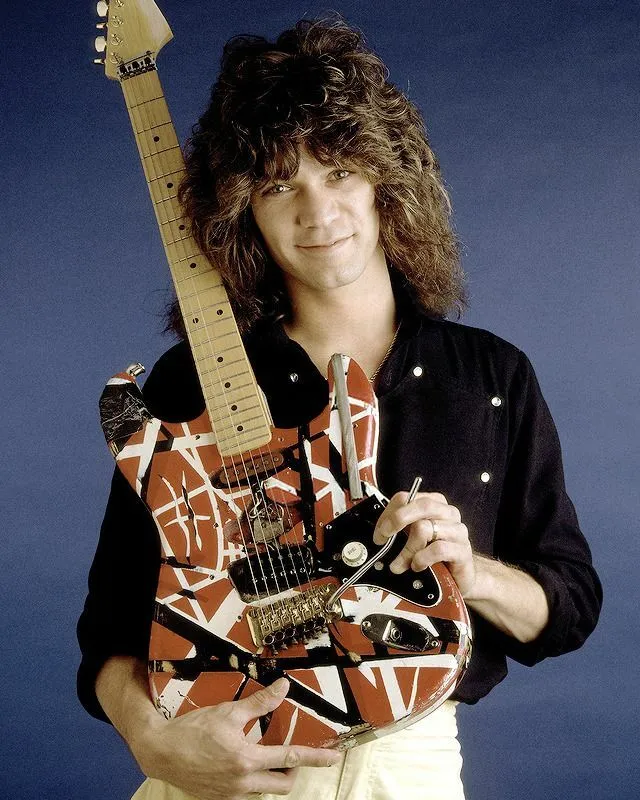
The Van Halen ‘Frankenstrat’.
5. Eddie Van Halen’s “Frankenstrat”
Eddie Van Halen’s “Frankenstrat” is one of the most unique and innovative guitars in rock history. This custom-built guitar combined elements of a Fender Stratocaster and a Gibson, resulting in a hybrid instrument that perfectly suited Van Halen’s revolutionary playing style.
The Creation of Frankenstrat
Van Halen built the “Frankenstrat” using a body from a Stratocaster and a neck from a Gibson. He painted the guitar with a distinctive red, white, and black striped design, making it instantly recognisable. The guitar featured a single humbucker pickup, which gave it a powerful, cutting tone.
Influence on Rock Music
The “Frankenstrat” was used in the recording of many of Van Halen’s greatest hits, including “Eruption” and “Panama.” The guitar’s innovative design and Van Halen’s virtuosic playing style had a profound impact on the development of rock guitar techniques and inspired generations of musicians.
Brian May’s ‘Red Special’.
6. Brian May’s “Red Special”
Brian May’s “Red Special” is a truly unique instrument, hand-built by May and his father in the early 1960s. This guitar has a distinctive tone and appearance, making it one of the most recognisable guitars in rock music.
Construction and Design
The “Red Special” was constructed using unconventional materials, including wood from an old fireplace and parts from a motorcycle. The guitar features custom-made pickups and a unique switching system, allowing May to produce a wide range of sounds.
Legacy and Impact
Brian May used the “Red Special” throughout his career with Queen, playing it on iconic tracks such as “Bohemian Rhapsody” and “We Will Rock You.” The guitar’s distinctive sound and May’s virtuosic playing have made it a symbol of musical creativity and innovation.
The ‘Black Strat’.
7. David Gilmour’s Black Strat
David Gilmour’s Black Strat, a 1969 Fender Stratocaster, is an essential part of Pink Floyd’s sound. This guitar has been used on some of the band’s most famous recordings and live performances.
The Evolution of the Black Strat
Gilmour acquired the Black Strat in 1970, and it has undergone numerous modifications over the years, including changes to the pickups and electronics. These modifications contributed to the guitar’s unique sound, which became a defining element of Pink Floyd’s music.
Historic Recordings
The Black Strat was used in the recording of Pink Floyd’s seminal albums, including “The Dark Side of the Moon,” “Wish You Were Here,” and “The Wall.” Its rich, versatile tone can be heard on tracks like “Comfortably Numb” and “Shine On You Crazy Diamond,” cementing its place in rock history.
The Keith Richards ‘Micawber’ Telecaster.
8. Keith Richards’ Micawber
Keith Richards of The Rolling Stones is known for his distinctive playing style and his favourite guitar, “Micawber,” a 1953 Fender Telecaster. This guitar is integral to Richards’ sound and has become synonymous with his musical identity.
Unique Modifications
Richards’ “Micawber” has been heavily modified, including the addition of a humbucker pickup in the neck position and the removal of the original bridge pickup. These changes give the guitar a thick, powerful tone that is perfect for Richards’ riff-driven playing style.
Signature Songs
“Micawber” has been used on many of The Rolling Stones’ greatest hits, including “Brown Sugar” and “Honky Tonk Women.” The guitar’s raw, gritty sound is a perfect match for Richards’ blues-influenced rock and roll style.
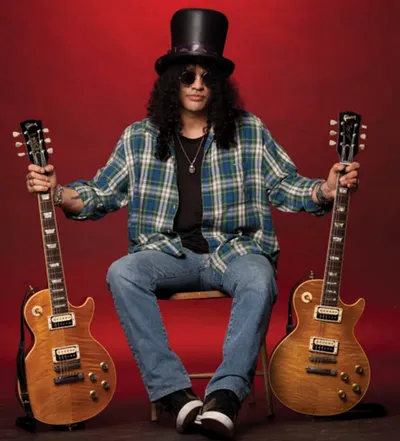
Slash with his ‘Appetite for Destruction’ Les Pauls.
9. Slash’s “Appetite” Les Paul
Slash, the legendary guitarist of Guns N’ Roses, is best known for his “Appetite” Les Paul, which he used during the recording of the band’s debut album, “Appetite for Destruction.”
The Story Behind the Guitar
Contrary to popular belief, the “Appetite” Les Paul is not a vintage Gibson but a replica made by luthier Kris Derrig. Despite this, the guitar has an incredible tone that contributed to the success of “Appetite for Destruction.”
Iconic Performances
Slash used the “Appetite” Les Paul to create some of rock’s most memorable riffs and solos, including those on “Sweet Child O’ Mine” and “Welcome to the Jungle.” The guitar’s searing tone and Slash’s fiery playing style helped define the sound of late 1980s rock.
The SRV Number One.
10. Stevie Ray Vaughan’s “Number One” Stratocaster
Stevie Ray Vaughan’s “Number One” Stratocaster, also known as “First Wife,” is a cornerstone of his blues-rock sound. This 1963 Fender Stratocaster was Vaughan’s main guitar throughout his career.
Characteristics and Modifications
“Number One” features a thick neck and high-output pickups, which contributed to Vaughan’s powerful, expressive playing style. The guitar also has a distinctive look, with its well-worn body and “SRV” initials on the pickguard.
Influence on Blues-Rock
Vaughan used “Number One” on many of his most famous recordings, including “Pride and Joy” and “Texas Flood.” The guitar’s soulful tone and Vaughan’s masterful technique have made it one of the most iconic instruments in blues-rock history.
George Harrison and his ‘Rocky’ Fender Strat.
11. George Harrison’s “Rocky” Stratocaster
George Harrison’s “Rocky” Stratocaster is a psychedelic masterpiece that reflects the cultural changes of the 1960s. This 1961 Fender Stratocaster was hand-painted by Harrison in bright, swirling colours.
Artistic Transformation
Harrison acquired the guitar in 1965 and transformed it into “Rocky” during the height of the psychedelic era. The guitar’s vibrant design made it a visual and musical icon of the time.
Memorable Moments
“Rocky” was used in the recording of several Beatles tracks, including “Lucy in the Sky with Diamonds” and “All You Need Is Love.” The guitar’s colorful appearance and Harrison’s innovative playing style have made it a symbol of the 1960s counterculture.
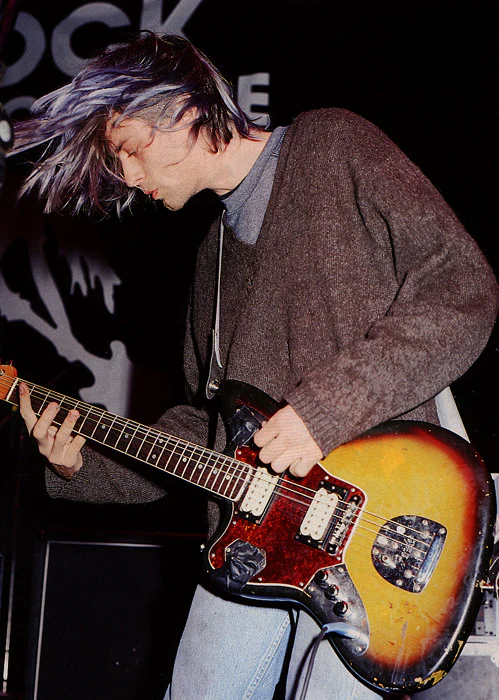
Kurt’s Fender Jaguar.
12. Kurt Cobain’s Jaguar
Kurt Cobain’s Fender Jaguar, a 1965 model, is one of the most famous guitars in alternative rock. This guitar played a key role in the sound of Nirvana, particularly on their breakthrough album “Nevermind.”
Distinctive Features
Cobain’s Jaguar featured custom modifications, including a humbucker pickup in the bridge position and a unique switching system. These changes gave the guitar a raw, edgy sound that was perfect for Nirvana’s grunge aesthetic.
Grunge Anthem
The Jaguar was used extensively on “Nevermind,” including on the iconic track “Smells Like Teen Spirit.” The guitar’s powerful, gritty tone helped define the sound of the 1990s alternative rock movement and remains an enduring symbol of the era.
Tony Iommi and his ‘Monkey’ SG.
13. Tony Iommi’s “Monkey” SG
Tony Iommi’s Gibson SG, affectionately known as “Monkey,” is a cornerstone of heavy metal. This guitar has been synonymous with Black Sabbath’s dark, heavy sound since the band’s inception.
Unique Modifications
Iommi’s “Monkey” SG features custom modifications, including extra-light strings and a zero fret, to accommodate his unique playing style and the fact that he lost the tips of two fingers in an accident. These adjustments allowed him to produce the powerful, sustained notes that characterise Black Sabbath’s music.
Heavy Metal Pioneer
“Monkey” was used on many of Black Sabbath’s classic tracks, including “Paranoid” and “Iron Man.” The guitar’s deep, resonant tone helped define the heavy metal genre and influenced countless guitarists.
Prince and his Cloud guitar.
14. Prince’s “Cloud” Guitar
Prince’s “Cloud” guitar is a custom-built instrument that became one of his trademarks. Known for its distinctive shape and vibrant colors, the “Cloud” guitar is as visually striking as it is musically versatile.
Design and Construction
The “Cloud” guitar was designed by luthier Dave Rusan for Prince’s movie “Purple Rain.” It features a unique, ergonomic design with an extended lower horn and an intricate headstock.
Performance Highlights
Prince used the “Cloud” guitar during many of his performances and recordings, including the iconic “Purple Rain” performance. The guitar’s eye-catching appearance and Prince’s virtuosic playing made it an unforgettable part of his stage persona.
The Gretsch ‘Twang Machine’.
15. Bo Diddley’s “Twang Machine”
Bo Diddley‘s custom-built rectangular guitar, known as the “Twang Machine,” is one of the most unique and recognisable instruments in rock and roll. This guitar is a testament to Diddley’s innovative spirit and distinctive sound.
Custom Design
The “Twang Machine” was designed by Diddley himself and built by various luthiers over the years. Its rectangular body and sharp edges gave it a futuristic look that stood out in the 1950s and 60s.
Rock and Roll Pioneer
Bo Diddley used the “Twang Machine” to create his signature rhythm-and-blues-infused rock and roll sound. Tracks like “Bo Diddley” and “Who Do You Love” showcase the guitar’s unique tone and Diddley’s pioneering musical style.
Old Black.
16. Neil Young’s “Old Black”
Neil Young‘s “Old Black” is a heavily modified 1953 Gibson Les Paul Goldtop, known for its raw, powerful sound. This guitar has been a constant companion throughout Young’s career.
Modifications and Tone
“Old Black” features a P-90 pickup in the bridge position and a Firebird pickup in the neck position. These modifications give the guitar its distinctive, gritty tone, which is perfect for Young’s electric performances.
Classic Performances
Neil Young has used “Old Black” on many of his classic tracks, including “Cinnamon Girl” and “Like a Hurricane.” The guitar’s raw, distorted sound has become a defining element of Young’s electric performances.
Number 9.
17. Pete Townshend’s “Number Nine” Les Paul
Pete Townshend of The Who is known for his aggressive playing style and his penchant for destroying guitars on stage. His “Number Nine” Gibson Les Paul Deluxe is one of the most famous guitars he used.
Stage Presence
“Number Nine” features a distinctive red finish and was heavily modified to withstand Townshend’s energetic performances. The guitar’s powerful sound was a perfect match for The Who’s explosive live shows.
Rock Opera Contributions
Townshend used “Number Nine” during the recording and performances of The Who’s rock opera “Quadrophenia.” The guitar’s robust tone and Townshend’s dynamic playing helped create some of rock’s most memorable live moments.
The Rickenbacker 325.
18. John Lennon’s Rickenbacker 325
John Lennon’s Rickenbacker 325 is one of the most iconic guitars of the early Beatles era. This short-scale guitar, with its distinctive look and jangly sound, became a symbol of the band’s early success.
Early Beatles Era
Lennon acquired the Rickenbacker 325 in Hamburg, Germany, in 1960. The guitar’s compact size and unique tone made it a perfect fit for the Beatles’ early rock and roll sound.
Historic Performances
Lennon played the Rickenbacker 325 during the Beatles’ legendary performances at the Cavern Club and on their early recordings, including hits like “Please Please Me” and “Twist and Shout.” The guitar’s distinctive appearance and sound made it a defining part of the Beatles’ image.
‘The Strat’.
19. The Edge’s “The Strat”
The Edge of U2 is known for his use of a variety of guitars, but his 1973 Fender Stratocaster, known simply as “The Strat,” is one of his most iconic instruments. This guitar has been integral to U2’s sound since the band’s early days.
Signature Sound
“The Strat” features a black finish and a maple neck, with modifications that include a DiMarzio FS-1 bridge pickup. These features contribute to The Edge’s distinctive, chime-like sound, characterised by his use of delay and effects.
Memorable Tracks
The Edge used “The Strat” on many of U2’s most famous tracks, including “New Year’s Day” and “Sunday Bloody Sunday.” The guitar’s bright, cutting tone helped define the band’s anthemic sound and has become a staple of their live performances.
The ‘EET FUK’.
20. James Hetfield’s “EET FUK” Explorer
James Hetfield of Metallica is known for his aggressive playing style and his collection of custom guitars. One of his most famous instruments is the “EET FUK” Explorer, a 1984 Gibson Explorer.
Custom Design
The “EET FUK” Explorer features a white finish with the words “EET FUK” written on the body, reflecting Hetfield’s rebellious attitude. The guitar is equipped with EMG 81 and 60 pickups, providing a powerful, high-gain sound.
Thrash Metal Icon
Hetfield used the “EET FUK” Explorer during the recording and touring of Metallica’s classic albums “Ride the Lightning” and “Master of Puppets.” The guitar’s brutal, aggressive tone is perfect for Metallica’s thrash metal sound and has become a symbol of the band’s relentless energy.
These additional iconic guitars have each contributed to the evolution of rock music in their own unique ways. Their distinctive sounds and the legendary musicians who played them continue to inspire and influence the world of music.