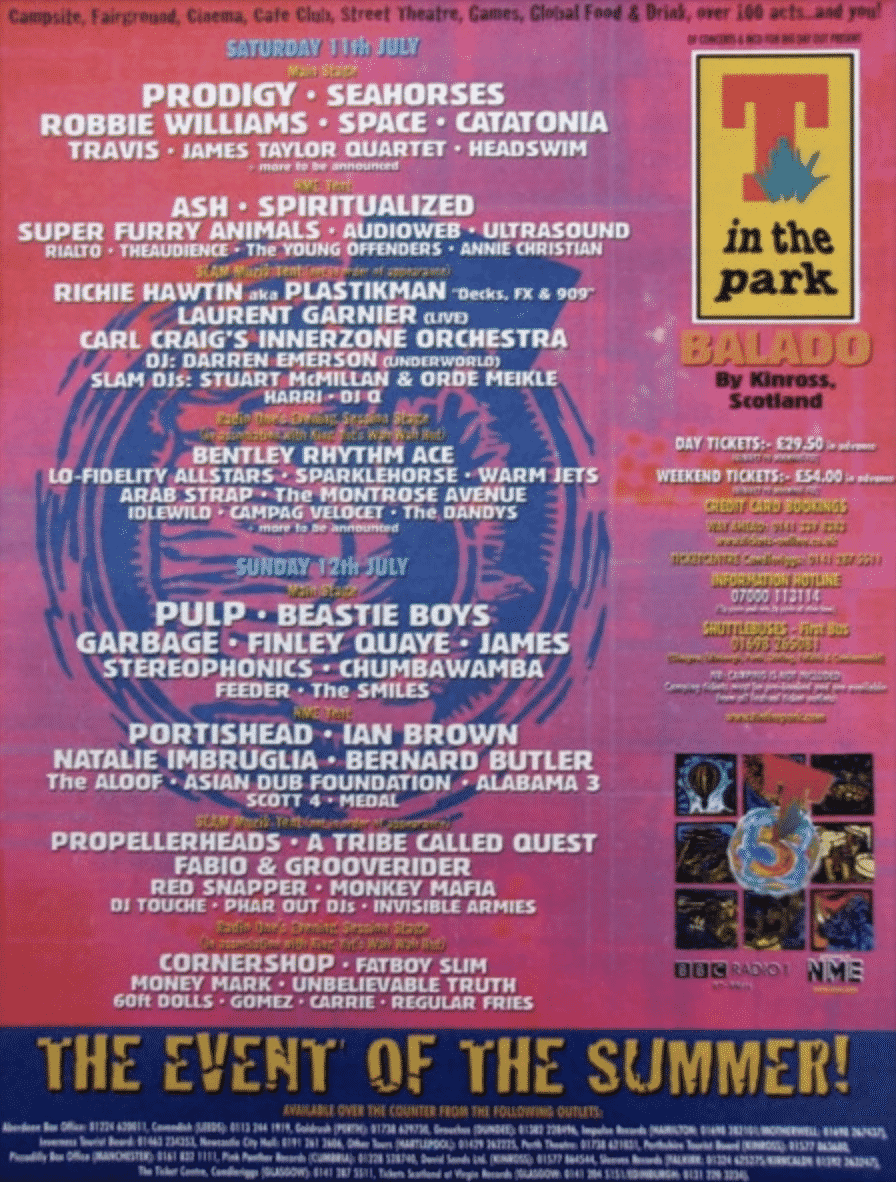
This week we interviewed one of our drum teachers, rock drumming veteran, Rick McMurray. The Irish rock chart-toppers Ash have amassed 1 Silver, 2 Gold and 2 Platinum-selling records in Britain, and they have had a massive 18 songs in the top 40 UK Singles Chart. NME Magazine named their album ‘1977’ as one of the 500 greatest albums ever released. To date, Ash have sold over 8 million albums worldwide.
Rick is currently over in the band’s studio in New York working on new material with his fellow bandmates, singer Tim Wheeler and bassist Mark Hamilton. Between touring, Rick teaches drums at Morningside School of Music. Rick is based in Edinburgh where he lives with his wife & two young girls.
What is your very first memory of seeing or playing a musical instrument?
When I was three, I was asked to play Little Drummer Boy at the church Xmas service. And I screwed it up. I guess I just like a challenge.
Did you take drum lessons?
Not really. I wish I’d gone for drum lessons when I was younger as I know I’ve picked up so many bad habits, which I’m trying to iron out.
Did any of your schoolmates play any instruments?
Not really. Only a few in my year were into music, but luckily I found a couple of guys to start a band with who were the year below me at school.
How old were you when you got your very first kit and what kind was it?
I was 13, and it was a Thunder budget kit. I remember the review in Rhythm mag said the snare was brilliant.
Did you ever play a second instrument?
I started out on guitar at the age of 11 I think but I was forced to go for piano lessons at age six or seven and I hated it. I wish I’d been more into it.
What bands/drummers did you practice along to when you were a kid/teen?
Most Aerosmith and The Black Crows before I joined a band.
How did the process of starting a band happen for you?
I played a drunk detective in the school production of a Russian play called The Suicide. Tim was one of the gipsy musicians, and I asked him for a go on his guitar. He was forming a cover band, so I asked if he had a drummer. It only lasted two rehearsals, but then he asked me to play with himself and Mark doing original stuff.
Did you meet at school and practice at lunch-time?
We practised every Saturday at Tim’s house as there was an old outbuilding we could use. School wasn’t made for rock’n’roll. It was mostly percussion and recorders.
Do you remember your first gig ever as ‘Ash’? Where was it?
It was in a back room of a bar in Belfast called The Penny Farthing with Tart Confusion and Lazergun Nun. We were told to turn down by some of the regulars in the front bar, who showed us a handful of bullets to persuade us. It worked. A bit.
How did you go about getting gigs before you had a manager/record company?
We sent off loads of demo tapes to people, but it was our mate who managed us at the time who made the best contact with a guy called Paddy Davis at Bad Moon PR.
How did you get signed? Did you go to them or did they come to you?
Paddy’s wife was from Downpatrick, where we grew up, so he came to see us while he was on holiday and then passed our tape to the guy who worked next door to him, Tav Stevens, who was starting his label. He put out our first single, then became our manager and brought us to London to do a bunch of showcase gigs. We got signed by Korda Marshall to Infectious Records after that.
What do you prefer, live or studio?
Used to be I preferred to live, but these days I love the studio. It’s more creative, and you get to push yourself to grow as a musician. Having said that I’m looking forward to touring.
What type of kits and cymbals do you prefer to use when you are playing?
I love playing vintage gear at the moment. Gretsch and Ludwig mainly but I’ve got loads of different snare drums. Performing live at fly-in festivals you get to try out loads of different kits. I don’t mind what I play, to be honest; I feel it’s good to mix things up. I’ve also joined an Edinburgh band called Thirteen Seven, and I’m getting a kick out of playing old, beat-up house kits at the gigs we’ve done. It keeps you on your toes when you don’t know if the kit is going to make it to the end of the set. I’ll probably take out my Gretsch kit or my Ludwig Vistalite on the upcoming dates.
Who is the most famous person you have ever met, did it go down well?
We’ve met Bono a few times. He’s the singer in U2. He didn’t get to where he is without being very charming.
What is your favourite Ash song?
Hard to pick one but today it’s probably Shining Light.
Which Ash video was the most fun to make?
We got to go to Cuba to do the Sometimes video which was a real trip. I was driving around in this old, 50s American car with boxes taped to the pedals so I could reach them. The weirdest thing was not seeing any advertising other than the Bacardi bat on top of the building where they used to make it and a sign saying ¡Viva la Revolucion! Sounds good to me.
What is the coolest moment you’ve had with Ash?
We’ve always had a special affinity with Reading festival so we are doing it for the 9th time this year. Last time they said if we make it to 10 appearances, they will erect a statue. It was quite late when they said it but we’ll hold them to it anyway.
If you could have one person in your band, who would it be?
If I could get a liver transplant I’d love to do a tour with Nathan Connolly from Snow Patrol.
What is the one piece of advice you would give drummers for their practice/technique?
Get yourself a good practice routine and do it every day because it’s a physically demanding instrument.
What is the one piece of advice you would offer musicians who want to go professional?
It’s probably 25% about being a great musician and 75% about being able to get on with people.
Check out the Ash online store where you can buy their new album Islands. Tickets for the upcoming Ash tour are on sale now.
Top Ten Tips for Using the New ABRSM Piano Syllabus: 2025
It is finally here, the new 2025-2026 ABRSM Piano syllabus. The new piano books are much broader in scope than the previous ones; they involve students in various musical activities during their piano study and can be accessed as a PDF file. The new piano syllabus contains several changes compared to its predecessor. We’ve listed some top tips for supporting your students through this transition in the article below. If you need more information about the new ABRSM Piano Syllabus, check out our blog post here.
Start preparing now for ABRSM piano exams
The new syllabus was introduced on the 9th of June, 2022. You can expect some influence from the old syllabus and pieces from similar composers. The transition between the previous syllabus and the 2025-2026 books is very straightforward.
Encourage yourself to become a self-sufficient piano researcher
Students will no longer be able to access the piano syllabus through ABRSM’s website once the new syllabus has been launched. The old syllabus will still be available, but it will be archived, so you won’t be able to access it yourself. Make the most of the time available by prioritising learning how to become a self-sufficient researcher. You’re sure to find this skill useful throughout your piano-playing career. You can use the new syllabus without looking at the old version.
Make use of the opportunity to focus on fundamentals and technique
The new syllabus puts a strong emphasis on musicality and creativity. However, it also places great importance on fundamentals and technique. You’ll be able to use the fact that you can no longer turn to the old syllabus to find their repertoire. You can focus your lessons on the core skills and techniques that will support your ongoing musical development.
Try out some new pieces from the ABRSM catalogue
The new ABRSM piano syllabus includes a wider variety of pieces. You can use the transition period to explore some of these new pieces. This will allow you to introduce some of the new composers whose works have been added to the syllabus. It will also allow you to see how well the pieces lend themselves to your performance abilities and development goals.
Assign several piano etudes and one piece from the catalogue as well
You don’t have to limit yourself to the materials in the new syllabus. We recommend you supplement the materials with other pieces from the ABRSM catalogue. This will make it easier for you to tailor the material you assign to the specific requirements of your piano playing.
Reinforce good habits with short exercises in finger dexterity and hand independence
The new syllabus includes a lot of musical activities. You can use the opportunity this provides to reinforce good piano habits. You can include a few short exercises in your piano playing whenever appropriate. These should encourage good habits such as finger dexterity and hand independence. These are important skills that you should develop as soon as possible.
Learn the importance of breathing in performance
The new syllabus includes several pieces that require the performer to draw on their breath. You can use the transition period to become familiar with the importance of breathing in performance. Doing so will help you avoid hyperventilating during the performance, resulting in several unpleasant side effects.
Discuss how dynamic markings set up expectations for audience and performer alike
The new piano syllabus includes several pieces for which dynamic markings have been specified. You can use the opportunity provided by the transition period to discuss how these markings set expectations for both audience and performer alike. Doing so will allow you to reinforce the importance of attending to these markings in performance.
To sum up
The new piano syllabus is much broader in scope than the current one; it will involve students in various musical activities during their piano study and can be accessed as a PDF file. The new syllabus contains several changes compared to its predecessor. We’ve listed some top tips for supporting your students through this transition in the article below. If you need more information about the new ABRSM Piano Syllabus, check out our blog post here.
The Surprising Benefits of Music Lessons for Children and Adults in Edinburgh
On any given day in Edinburgh – from the city centre to the Lothians, Fife and the Scottish Borders – you might hear a piano melody floating from a living room or the strum of a guitar in a local café.
The benefits of music lessons are evident in various aspects of life, from cognitive improvements to emotional well-being.
In this comprehensive guide, we’ll explore the science-backed benefits of learning guitar, piano, singing or drums – the instruments most popular among students here in Edinburgh.
Exploring the benefits of music lessons can reveal how they enhance creativity and problem-solving skills.
Cognitive Benefits: A Brain Boost for All Ages
One of the most exciting areas of research in music education is how it enhances cognitive development – essentially giving your brain a workout. Learning to play an instrument or sing involves a complex mix of tasks: reading music (or memorizing lyrics), coordinating muscle movements, listening closely to pitch and rhythm, and expressing creativity. It’s like a full-body brain exercise, and scientists have found it can lead to measurable improvements in memory, attention and reasoning.
Many individuals find that the benefits of music lessons extend beyond mere enjoyment; they can transform one’s approach to learning.
For children, these cognitive boosts often translate into better academic performance at school.
Furthermore, the benefits of music lessons can significantly influence academic success and personal fulfilment.
Music doesn’t just help with language; it may also support mathematical thinking.
By embracing the benefits of music lessons, students develop essential life skills that improve their overall educational experience.
Perhaps most intriguingly, the cognitive benefits of music are not limited to children.
As adults, the benefits of music lessons can lead to newfound passions and long-lasting friendships.
In summary, picking up an instrument or vocal training gives your brain a serious boost. Kids who take music lessons often enjoy improved memory, better attention spans, and a leg up in academic skills like reading and maths. Adults, too, can keep their minds nimble and sharp through music, potentially fending off cognitive decline. Little wonder that councils across Scotland have emphasized the importance of instrumental music tuition for children’s learning and development – the evidence is clear that music makes our minds stronger at every stage of life.
Understanding the benefits of music lessons is crucial for parents seeking the best opportunities for their children.
Emotional and Mental Health Benefits
Beyond academics and IQ, music lessons offer profound benefits for emotional well-being and mental health.
Exploring the benefits of music lessons can shed light on their therapeutic power for mental health.
It’s not just a temporary mood boost either.
Many report that the benefits of music lessons help reduce stress and foster a sense of community.
Music can also be a form of therapy and emotional expression, which is especially valuable for children (and adults) who struggle to communicate feelings through words.
Ultimately, the benefits of music lessons encompass so much more than just musical skills.
For children and adults alike, the benefits of music lessons can be a transformative journey.
Confidence is another psychological area where music lessons work wonders.
Realising the benefits of music lessons can inspire individuals to pursue musical education.
Lastly, music can play a role in more serious mental health support.
In conclusion, the benefits of music lessons are profound and far-reaching, impacting lives in significant ways.
Understanding the benefits of music lessons is crucial for parents seeking the best opportunities for their children.
Through the benefits of music lessons, individuals often discover a path to personal growth and resilience.
For children and adults alike, the benefits of music lessons can be a transformative journey.
Ultimately, the benefits of music lessons encompass so much more than just musical skills.
The benefits of music lessons are profound and far-reaching, impacting lives in significant ways.
Through the benefits of music lessons, individuals often discover a path to personal growth and resilience.
I cannot emphasise this one enough. You have to practise your guitar! If you only choose one of these tips to follow and ignore the rest, make sure it’s this one you choose.
2. Get into the habit of tuning your guitar BEFORE you do anything.
Remember to tune your guitar every time you pick it up. Nothing makes a guitarist sound worse than an out of tune guitar (and yes, even if it’s only slightly out, people will notice!)
3. Don’t try running before you can walk.
By this I mean get the guitar playing technique correct first before you try to play too quickly. If it’s a fast piece you are learning, play it slowly and build up speed as you learn and practise it until you are playing it quickly and accurately. Practise up AND downstrokes with your plectrum. This may seem awkward at first, but is essential later for playing quickly. For guitarists, the temptation is often to play faster than they are capable, which leads to ‘sloppy’ execution. Each note should sound crisp and clear. When the top guitarists play at blistering speed, each note is still played clearly and if you were to slow down the recording it would show that.
4. Record yourself playing
Whether it be on a mobile phone, 4 track, tape recorder, computer software etc. When you record yourself and listen back, you will hear exactly how your playing sounds to the listener and you will often realise it’s not as great as it sounded when you were actually playing it.
5. Learn to improvise
This can be done by playing the guitar along to your favourite tracks. Try to deviate from whatever is on the recording and be confident to try new things. You will be amazed at how many new things you will come up with and how much quicker your guitar playing will develop. It’s also great fun!!!
6. Have a jam!
Musicians enjoy nothing more than hooking up with other musos to generally make a noise! It’s also a great time to develop your creative side. Take turns playing backing/rhythm whilst the other person takes the lead and vice versa.
7. Replace your strings when they can no longer be wiped clean.
It’s amazing how much a new set of strings can bring a new lease of life to a guitars sound. Always take care of your instrument and clean your hands before picking it up to play.
8. Experiment with guitar effects and be creative.
The top guitarists keep their sound interesting by using effects to enhance their sound. It’s amazing how different a piece can sound simply by changing the effects you use Hendrix was a pioneer and always tinkering with sounds in the studio such as fuzz, Wah and distortion, he even played live with a plectrum between his teeth to pluck the strings. The Edge of U2 has a trademark sound using a lot of ‘delay’ effects and Jimmy Page of Led Zepplin even played the guitar with a violin bow!!!
9. Try and learn your guitar scales
Do this to avoid repetition. A good guitarist can look at modes, but don’t get bogged down. Pick a mode that you really like and master it. When improvising, you can then drop in and out of different scales and keep your playing interesting to the listener.
10. Invest in private or group tuition.
A professional teacher can enhance your playing by devising a learning schedule that will develop your ability quickly whilst keeping things fun. They are a catalyst for you to become the rock god that you can be! Edinburgh guitar lessons really do help a lot!
11. PRACTISE, PRACTISE, PRACTISE!!!
Ok, I know it’s a top ten, but I’m repeating one for 11. as it’s important.
Chris Jones BA (Hons), is a guitar expert at Morningside School of Music and has vast intensive playing experience stretching over 20 years.
In the realm of musical education, the saxophone stands out as a versatile and captivating instrument. Whether you’re a beginner, intermediate, or advanced player, the right saxophone book can significantly enhance your learning experience. This guide will explore the best saxophone books available, providing detailed insights to help you make an informed choice.
Our saxophone teachers all agree that this is a must for an sax player!
For beginners keen on mastering the saxophone, “Essential Elements for Band – Eb Alto Saxophone Book 1” by Tim Lautzenheiser is an indispensable resource. This comprehensive guide covers all foundational aspects of saxophone playing, including music reading, finger placement, and breath control. Each lesson is meticulously designed with step-by-step instructions, ensuring that newcomers can progress confidently. The inclusion of play-along tracks enhances the learning experience, allowing students to practice effectively and enjoyably.
“Essential Elements for Band – Eb Alto Saxophone Book 1” stands out due to its clear and structured approach, making it an ideal choice for novice saxophonists. Tim Lautzenheiser’s expertise shines through in this well-crafted book, providing a solid foundation for aspiring musicians. Whether you’re starting from scratch or refining basic skills, this book offers essential tools and techniques to help you achieve your musical goals.
Our sax teachers at Morningside School of Music love this book and recommend it to all their E Flat beginner saxophone students.
This book really has stood the test of time as it is still used on a daily basis for saxophone lessons.
Another excellent choice for beginners is the “Rubank Elementary Method – Saxophone” by N.W. Hovey. This classic book has been a trusted resource for generations of saxophonists, providing a comprehensive introduction to the instrument. The method features progressive exercises that build on each other, allowing students to steadily enhance their skills.
The “Rubank Elementary Method – Saxophone” stands out for its clear, systematic approach, making it perfect for novice players. N.W. Hovey’s expertise is evident in the well-structured lessons that cover essential aspects of saxophone playing. Whether you are starting from scratch or looking to improve your foundational skills, this book offers invaluable guidance to help you achieve your musical aspirations.
Never judge a book by its cover! You will be surprised how much this old book can assist in your saxophone playing development. If you are having saxophone lessons, you will need this book for sure!
These saxophone exercises can bring on your technique and also help you with improvisation.
Intermediate players aiming to refine their technique will find “25 Daily Exercises for Saxophone” by H. Klose immensely beneficial. This highly regarded book is known for its rigorous approach to honing technical proficiency. Each exercise is meticulously crafted to enhance finger dexterity, breath control, and overall musicality.
With a focus on daily practice, Klose’s exercises are perfect for those committed to serious improvement. The structured routines not only challenge players but also provide a clear path to mastering more advanced aspects of saxophone performance. Engaging and effective, this book is an invaluable tool for any saxophonist looking to elevate their skills.
Exercises are a vital part of improving technique on any musical instrument. This book should definitely be in your personal library of music books for learning t0 play the sax.
Bruce Pearson is a well respected music educator, author and clinician.
“Saxophone Method, Book 2” by Bruce Pearson is an excellent recommendation for intermediate saxophonists seeking to advance their skills. This book picks up where beginner methods leave off, seamlessly transitioning players into more complex rhythms, scales, and pieces. Pearson’s methodical approach ensures that each new concept is introduced in a manageable way, fostering confidence and competence.
One of the standout features of Pearson’s book is its structured progression. Each chapter is designed to build on the previous one, allowing saxophonists to develop their abilities steadily without feeling overwhelmed. The exercises and musical pieces included are carefully selected to challenge and engage, promoting both technical proficiency and musical expression.
Additionally, “Saxophone Method, Book 2” places a strong emphasis on developing a well-rounded musician. Beyond just technical exercises, the book includes a variety of musical genres and styles, encouraging players to broaden their repertoire and versatility. For intermediate saxophonists looking to deepen their understanding and enjoyment of the instrument, Bruce Pearson’s method is an invaluable resource.
If you are looking to learn jazz improvisation and composition, then look no further.
For advanced saxophonists looking to elevate their improvisational prowess, “Patterns for Jazz: A Theory Text for Jazz Composition and Improvisation” by Jerry Coker is an indispensable resource. This acclaimed book delves deeply into jazz theory, providing a comprehensive framework for understanding and applying improvisational techniques.
Coker’s approach in “Patterns for Jazz” is both systematic and creative, offering a rich array of patterns and exercises designed to expand the improviser’s toolkit. By studying these patterns, saxophonists can enhance their ability to spontaneously create melodic lines and harmonies that resonate within the jazz idiom.
Beyond technical exercises, Coker emphasizes the importance of developing a deep understanding of jazz structure and harmony. His insights into chord progressions, scales, and rhythmic patterns empower saxophonists to navigate complex musical contexts with confidence and expressiveness.
Whether you’re honing your skills as a performer or delving into jazz composition, “Patterns for Jazz” provides invaluable guidance and inspiration for advanced saxophonists aiming to excel in the art of improvisation.
This is a great book that covers so much along the way. A must!
For those aspiring to master the saxophone, Paul DeVille’s “Universal Method for Saxophone” is an indispensable resource. This comprehensive guide covers every aspect of saxophone playing, from advanced techniques to nuanced musical interpretation. It stands out for its extensive range of exercises and etudes, meticulously designed to hone advanced skills and elevate musical expression.
DeVille’s method is renowned for its thoroughness and structured approach, providing challenges that inspire saxophonists to push their boundaries. Each exercise within the book serves to strengthen technical proficiency while encouraging artistic growth. The emphasis on musicality alongside technical mastery makes it a favourite among dedicated musicians aiming to refine their craft.
Whether you’re seeking to conquer new technical heights or deepen your understanding of musical intricacies, DeVille’s method offers invaluable insights and practical exercises. It serves as an essential companion for any saxophonist committed to achieving mastery in their playing.
Again, our sax teachers say that this is one book that every saxophonist should have access to.
“The Jazz Method for Saxophone” by John O’Neill is a standout resource for jazz enthusiasts looking to deepen their understanding and proficiency. This comprehensive book not only covers the fundamentals of jazz saxophone, such as tone production, articulation, and phrasing, but also provides a rich selection of jazz standards and play-along tracks for practical application.
O’Neill’s approach is both instructive and immersive, offering clear explanations and exercises that help saxophonists develop their jazz skills effectively. The inclusion of play-along tracks enhances the learning experience, allowing musicians to practice and refine their techniques in a supportive musical context.
Whether you’re new to jazz or looking to expand your repertoire and improvisational abilities, “The Jazz Method for Saxophone” equips you with essential tools and insights. It’s a valuable companion for saxophonists at any stage, providing the foundation and inspiration needed to excel in the world of jazz music.
The Easy Jazz Conception book for Alto Saxophone by Jim Snidero.
“Jazz Conception for Saxophone” by Jim Snidero stands out as an essential resource for jazz saxophonists seeking to elevate their playing. This comprehensive guide features 21 solo etudes designed around standard chord progressions, complemented by a CD featuring performances by Jim Snidero and a rhythm section. This combination provides saxophonists with practical exercises to enhance improvisational skills and master the nuances of jazz phrasing.
Snidero’s approach in “Jazz Conception” is highly effective, offering saxophonists engaging etudes that challenge and inspire. Each piece is meticulously crafted to deepen understanding of jazz language and style, fostering a strong foundation for improvisation and musical expression.
With its integrated audio component, “Jazz Conception for Saxophone” facilitates immersive learning. Whether you’re looking to refine your soloing abilities or enrich your musicality within the jazz genre, this resource equips you with the necessary tools and insights to progress confidently in your saxophone journey.
Himie Voxman was well regarded as one of America’s finest music educators.
“Selected Studies for Saxophone” by H. Voxman is a valuable asset for classical saxophonists aiming to enhance their technical proficiency. This compilation of studies meticulously addresses fundamental aspects of playing, including tone production, articulation, and dynamics. It serves as an excellent resource for those dedicated to refining their classical saxophone technique.
Voxman’s collection is renowned for its structured approach and comprehensive coverage of essential skills. Each study is carefully crafted to challenge and develop saxophonists, offering exercises that focus on precision and musical expression.
Whether you’re a student striving to master classical saxophone fundamentals or a performer looking to polish your skills, “Selected Studies for Saxophone” provides a wealth of exercises and insights to support your musical journey effectively.
Another excellent book by H. Voxsman that is still highly regarded by music educators.
Classical saxophonists seeking repertoire for concert and contest settings will find the “Concert and Contest Collection for Eb Alto Saxophone” by H. Voxman to be an exceptional choice. This curated anthology features a variety of solos specifically selected to showcase diverse aspects of saxophone performance.
Voxman’s collection is notable for its thoughtful curation, presenting pieces that range in style and difficulty to cater to different levels of proficiency. Each solo is crafted to highlight specific technical and expressive elements, providing saxophonists with opportunities to demonstrate their skills in formal performance settings.
Whether preparing for a competition, recital, or simply looking to expand their musical repertoire, saxophonists can rely on the “Concert and Contest Collection” to offer engaging and enriching pieces. Voxman’s expertise ensures that each selection within this book not only challenges but also inspires classical saxophonists on their musical journey.
Larry Teal’s “The Art of Saxophone Playing” is a foundational text revered by saxophonists across all skill levels. This comprehensive guide delves deeply into various facets of saxophone technique, including breath control, finger agility, and tone production. Embraced by instructors for its thorough pedagogical approach, the book offers a wealth of knowledge and practical exercises to enhance saxophonists’ proficiency.
Teal’s expertise shines throughout the text, providing clear explanations and insightful tips that cater to both beginners and seasoned players. Whether refining embouchure techniques or mastering advanced playing styles, saxophonists will find valuable tools and techniques within these pages to elevate their musicality and performance capabilities.
For those dedicated to honing their craft, “The Art of Saxophone Playing” serves as an invaluable resource, offering a roadmap to mastering the intricacies of saxophone performance and achieving expressive musicality.
Looking to soar to new musical heights on your saxophone? Sigurd Rascher’s guide, dedicated to expanding the altissimo register, is a game-changer. “Top Tones for the Saxophone: Four-Octave Range” is more than just a book—it’s a treasure trove of exercises and techniques crafted to unlock a stunning four-octave range. Perfect for advanced saxophonists hungry to explore the outer limits of their instrument, Rascher’s insights promise to elevate your playing to extraordinary levels.
In the realm of saxophone mastery, Rascher’s work is a beacon for those craving technical excellence and musical innovation. By focusing intensely on the altissimo register, “Top Tones for the Saxophone” equips musicians with the tools to conquer challenging passages and expressively reach into higher octaves with precision. Whether you’re preparing for a virtuosic solo or aiming to stand out in an ensemble, this book offers indispensable guidance to refine your skills and expand your sonic palette.
Rascher’s approach isn’t just about hitting high notes; it’s about mastering them with finesse and control. With a blend of rigorous exercises and expert tips, “Top Tones for the Saxophone” transforms the daunting altissimo register into a playground for creativity and musical exploration. Dive into Rascher’s techniques, and discover how you can redefine your saxophone journey with confidence and flair.
7. Saxophone Books for Specific Styles
A wide range of classical pieces for alto saxophone that will give you hours of playing fun.
This expansive collection offers instrumentalists a rich repertoire of “101 classical themes”, spanning a wide range of musical genres and eras. Included are iconic pieces such as Ave Maria, Canon in D, Clair de Lune, and The Flight of the Bumble Bee, among others. Whether you’re drawn to the elegance of Eine Kleine Nachtmusik, the haunting melodies of Gymnopedie No. 1, or the lively rhythms of the William Tell Overture, this compilation promises something for every classical music enthusiast.
From solemn marches like the Funeral March of a Marionette to beloved piano compositions like Fur Elise and Ode to Joy, each piece in this collection offers instrumentalists the opportunity to explore and interpret timeless melodies. Perfect for performances, practice sessions, or simply for the joy of playing, these classical themes are a testament to the enduring appeal and versatility of classical music across generations.
Whether you’re a pianist, violinist, flautist, or any other instrumentalist, this collection provides a diverse selection of pieces that showcase the beauty and depth of classical music. With familiar tunes like the Wedding March and thematic selections from Swan Lake, musicians of all levels can immerse themselves in the rich history and artistry of classical compositions.
This is an excellent guide for blues and jazz musicians.
“The Blues Scales: Essential Tools for Jazz Improvisation” by Dan Greenblatt is a must-have for saxophonists passionate about exploring the blues. This comprehensive guide delves deeply into the nuances of the blues scale and its vital role in jazz improvisation. With a wealth of exercises, patterns, and real-world examples, Greenblatt equips players with the tools needed to master the expressive and soulful elements of the blues.
Choosing the right saxophone book can profoundly impact your musical journey, whether you’re embarking on it anew or seeking to refine advanced skills. Each book on this curated list has been selected for its ability to offer thorough and effective instruction. They cater to saxophonists at various stages of development, ensuring continual growth and excellence in their musical pursuits.
From foundational techniques to advanced improvisational methods, these books provide invaluable resources to enhance your saxophone proficiency. Whether you’re honing your technique with classical pieces or delving into the vibrant world of jazz, these selections offer comprehensive guidance to support your musical exploration and development.
Since the day Morningside School of Music was founded as a one-man band back in 1999, charitable giving has always been extremely high on our agenda. We do our utmost to help others in any way we can, and very rarely turn down a request for assistance. From financial donations and equipment gifts to supplying music-lesson vouchers, performing live at events, organising charity concerts, working free of charge on projects, undertaking staff-led charity challenges and hosting our annual dinner each November, our directors and teachers provide assistance wherever it is needed. We take this obligation very seriously.
We have supported a long list of charities over the years (a selection of which is listed below). We aim to treat all causes equally, though we do have a particular soft spot for child-welfare and animal-welfare organisations.
If you work for a registered charity or are fundraising for a good cause and need help, please feel free to get in touch—we will do our very best to assist.
Barnardo’s
Breakthrough T1D Cash For Kids CHAS Children’s Hospices Childline Children 1st Children in Need Great Ormond Street Hospital Moni Malawi NSPCC Oxfam Rainbow Trust Save the Children Sick Kids Friend’s Foundation The Edinburgh Children’s Hospital Charity Unicef
The Junior Diabetes Research Fund World Vision
Ananda Animal Sanctuary
Animal Advocates Alliance Animal Aid
Animal Concern
Animal Equality
Animals in Ukraine Battersea Dog & Cats Home Blue Cross Born Free Cats Protection League Compassion in World Farming Dogs Trust
Dzīvnieku Brīvība Edinburgh Dog & Cat Home
Forth Hedgehog Hospital
Four Paws International
In Defense of Animals International Fund For Animal Welfare League Against Cruel Sports Mercy for Animals National Animal Welfare Trust OneKind PDSA PETA PETA UK RSPB RSPCA Scottish SPCA
The Animal Justice Project Trust The Humane League
Humane World for Animals The Jane Goodall Institute VIVA WWF
Age Scotland Alzheimer Scotland Anthony Nolan
Bethany Christian Trust Beatson Cancer Charity British Heart Foundation British Red Cross Cancer Research UK Capability Scotland Chest Heart & Stroke Scotland Christian Aid Comic Relief DEBRA Diabetes UK Drake Music Dyslexia Scotland Epilepsy Scotland Erskine Guide Dogs Help For Heroes LGBT Youth Macmillan Cancer Marie Curie Masonic Charitable Foundation MND Scotland
Morningside Parish Church National Trust Poppy Scotland Prostate Cancer UK
Richmond’s Hope Edinburgh RNIB RNLI Salvation Army
Sacred Heart Church Jesuit Centre SAMH Sands Lothians SCIAF Scottish Charity Air Ambulance Scottish Police Benevolent Fund Shelter Scotland Sistema Scotland St Columba’s Hospice Stonewall Teenage Cancer Trust
The Open Door The Romanian Community Church The Samaritans YMCA
Blackhall Primary School Bonaly Primary School
Boroughmuir High School Brunstane Primary School Bruntsfield Primary School Buckstone Primary School Corstorphine Primary School Craiglockhart Primary School Edinburgh College Edinburgh Napier University Fettes College Flora Stevenson Primary School George Heriot’s School George Watson’s College Heriot-Watt University James Gillespie’s Primary School Kilgraston School Loretto School Mary Erskine School Merchiston Castle School Pentland Primary School Portobello Primary School Queen Margaret University Rudolf Steiner School South Morningside Primary School St. George’s School for Girls St. Peter’s Primary School
St. Thomas of Aquins High School Stewart’s Melville School Stockbridge Primary School The University of Edinburgh The University of Highlands & Islands The University of West of Scotland
King Charles’ Favorite Songs Announced in His Music Playlist
Table of Contents
Introduction
The King’s Musical Journey
2.1. Early Musical Influences
2.2. Personal Musical Preferences
The King’s Music Room: An Apple Music Collaboration
3.1. Concept and Purpose
3.2. Recording at Buckingham Palace
Diverse Genres in the Playlist
4.1. Disco and Pop Hits
4.2. Reggae and Afrobeats
4.3. Classical and Traditional Pieces
Featured Artists and Tracks
5.1. Kylie Minogue
5.2. Bob Marley
5.3. Grace Jones
5.4. Davido
5.5. Raye
Personal Anecdotes and Reflections
6.1. Encounters with Artists
6.2. Impact of Music on the King’s Life
Celebrating Commonwealth Day Through Music
7.1. Significance of the Commonwealth
7.2. Music as a Unifying Force
Broadcast Details and Availability
8.1. Airing on Apple Music 1
8.2. On-Demand Streaming
Public Reception and Impact
9.1. Audience Reactions
9.2. Influence on Music Streaming Trends
The King’s Enduring Love for Music
10.1. Patronage and Support for the Arts
10.2. Future Musical Endeavors
Conclusion
FAQs
King Charles’ favourite songs.
Introduction
Music has always been a universal language, transcending borders and bringing people together. It offers a glimpse into one’s soul, revealing personal tastes, memories, and experiences. Recently, King Charles III opened a window into his musical world by sharing a curated playlist of his favorite songs. This collection not only showcases his diverse musical preferences but also celebrates the rich tapestry of the Commonwealth’s musical heritage.
The King’s Musical Journey
Early Musical Influences
King Charles III’s affinity for music is deeply rooted in his upbringing. From a young age, he was exposed to various musical genres, thanks to the royal family’s patronage of the arts. His education included learning to play the piano, trumpet, and cello, instruments that laid the foundation for his appreciation of classical compositions. This early immersion fostered a lifelong passion for music, influencing his personal and public life.
Personal Musical Preferences
Over the years, King Charles’s musical tastes have evolved, encompassing a wide array of genres. His playlist reflects this eclecticism, featuring everything from classical masterpieces to contemporary hits. This diversity underscores his belief in music’s power to evoke emotions, trigger memories, and unite people across cultures.
The King’s Music Room: An Apple Music Collaboration
Concept and Purpose
In a groundbreaking collaboration with Apple Music, King Charles launched “The King’s Music Room,” a special radio show designed to share his favorite tracks with the world. This initiative aims to celebrate Commonwealth Day by highlighting the musical talents of artists from member countries, reinforcing the cultural bonds that tie the Commonwealth together.
Buckingham Palace.
Recording at Buckingham Palace
The show was recorded in the King’s office at Buckingham Palace, adding a personal touch to the broadcast. This setting not only provides listeners with a sense of intimacy but also emphasizes the significance of the occasion. The King’s commentary throughout the show offers insights into his personal connections with the selected songs and artists.
Diverse Genres in the Playlist
Disco and Pop Hits
The playlist kicks off with vibrant disco and pop tracks that have stood the test of time. These songs, characterized by their catchy melodies and danceable rhythms, reflect the King’s appreciation for music that brings joy and energy.
Reggae and Afrobeats
Delving into the rich sounds of reggae and Afrobeats, the playlist showcases the rhythmic diversity of the Commonwealth. These genres, known for their infectious beats and cultural significance, highlight the King’s recognition of music’s role in storytelling and social commentary.
Classical and Traditional Pieces
Balancing contemporary tracks, the playlist also features classical and traditional pieces. These selections pay homage to the timeless compositions that have influenced music for centuries, reflecting the King’s deep respect for musical heritage.
A guard marches at the Royal residence of His Majesty, King Charles III.
Featured Artists and Tracks
Kylie Minogue
Australian pop icon Kylie Minogue graces the playlist with her hit “Can’t Get You Out of My Head.” This inclusion not only highlights her enduring appeal but also represents the vibrant music scene of the Commonwealth nations.
The legendary Bob Marley’s “Could You Be Loved” brings the soulful essence of reggae to the collection. Marley’s music, synonymous with messages of love and unity, resonates with the King’s appreciation for songs that inspire and uplift.
Grace Jones’s eclectic style and genre-blending tracks add a unique flavor to the playlist. Her inclusion reflects the King’s admiration for artists who push boundaries and redefine musical norms.
Nigerian-American singer-songwriter Davido’s presence introduces the vibrant sounds of Afrobeats. His music exemplifies the contemporary rhythms emerging from Africa, showcasing the dynamic evolution of the Commonwealth’s musical landscape.
Recent Brit Award winner Raye represents the new wave of talent within the Commonwealth. Her inclusion signifies the King’s support for emerging artists who are shaping the future of music.
Throughout the broadcast, King Charles shares personal anecdotes about his interactions with some of the featured artists. These stories offer listeners a glimpse into the relationships and experiences that have shaped his musical journey, adding depth to the playlist.
Impact of Music on the King’s Life
The King reflects on how music has been a source of comfort, joy, and inspiration throughout his life. He emphasizes its ability to evoke memories and bring people together, reinforcing his belief in music as a unifying force.
Celebrating Commonwealth Day Through Music
Significance of the Commonwealth
The playlist serves as a tribute to the 56 nations that comprise the Commonwealth, celebrating their cultural diversity and shared values. By featuring artists from various member countries, the King underscores the organization’s commitment to unity and collaboration.
Music as a Unifying Force
Music’s universal appeal makes it a powerful tool for fostering connections among people of different backgrounds. The King’s playlist exemplifies this by blending genres and artists from across the Commonwealth, illustrating how music transcends borders.
Broadcast Details and Availability
Airing on Apple Music 1
“The King’s Music Room” premiered on Apple Music 1 on March 10, coinciding with Commonwealth Day celebrations. The global platform allowed listeners worldwide to tune in and experience the King’s curated selection
On-Demand Streaming
For those who missed the live broadcast, the playlist is available on Apple Music for on-demand streaming. This ensures that fans and music enthusiasts worldwide can listen to the King’s favorite songs at their convenience. Apple Music subscribers can access the full playlist, complete with the King’s commentary, giving them a deeper understanding of his musical inspirations.
The King has a love for music as well as the environment.
Public Reception and Impact
Audience Reactions
The announcement of King Charles’ playlist sparked excitement among music lovers and royal watchers alike. Many were surprised by the King’s eclectic taste, particularly his inclusion of contemporary artists like Raye and Davido. Social media platforms quickly filled with discussions about his selections, with fans debating their own favorite songs from the playlist. The inclusion of Bob Marley and Kylie Minogue drew significant attention, with some praising the King for his appreciation of timeless classics.
Influence on Music Streaming Trends
Following the release of the playlist, many of the featured songs experienced a surge in streaming numbers. Artists like Davido and Grace Jones saw an increase in listeners, as new audiences discovered their music through the King’s recommendations. Apple Music also reported an uptick in playlist engagement, as listeners explored the curated collection.
The King’s Enduring Love for Music
Patronage and Support for the Arts
King Charles has long been a supporter of the arts, and his playlist is a testament to his deep appreciation for music. Over the years, he has actively championed various musical initiatives, including programs that support young artists and classical music education. His involvement in organizations such as the Royal College of Music highlights his commitment to nurturing musical talent.
Future Musical Endeavors
With the success of “The King’s Music Room,” there is speculation that King Charles may continue sharing his musical tastes in the future. Whether through additional playlists, special broadcasts, or collaborations with artists, his influence on the music world is likely to continue. Many hope that this initiative will encourage younger generations to explore the diverse sounds of the Commonwealth.
Conclusion
King Charles III’s music playlist offers a fascinating glimpse into his personal tastes while celebrating the rich musical diversity of the Commonwealth. By blending classic hits with modern tracks, he showcases the unifying power of music across generations and cultures. His selections reflect a deep appreciation for rhythm, melody, and storytelling—elements that transcend borders and bring people together. As fans continue to explore his curated tracks, one thing is clear: music remains a significant and cherished part of the King’s life.
FAQs
1. Why did King Charles release a music playlist?
King Charles released the playlist as part of a special Apple Music collaboration to celebrate Commonwealth Day. It highlights his personal musical preferences and the diverse sounds of the Commonwealth nations.
2. Where can I listen to King Charles’ playlist?
The playlist is available on Apple Music, both as a live broadcast on Apple Music 1 and for on-demand streaming.
3. What types of music are included in the King’s playlist?
The playlist features a mix of genres, including pop, reggae, Afrobeats, disco, and classical music. Artists range from Kylie Minogue and Bob Marley to Davido and Grace Jones.
4. Did King Charles personally choose the songs?
Yes, the King personally selected the songs for the playlist, offering insights into his musical journey and preferences.
5. Will King Charles release more playlists in the future?
There is no official confirmation, but given the positive reception, it is possible that he may share additional playlists or musical recommendations in the future.
Are you asking yourself “What is the best book for a beginner piano?”, “What piano piece should I learn as a beginner?” or “Can I learn piano with just book?”, well done’t worry, we have a selection of suitable piano books for beginners that will help. When it comes to introducing your child to the world of music, choosing the right beginner piano book is crucial.
With so many options available, it can be overwhelming to decide which one is best for your child. This guide will walk you through the top 5 beginner piano books for children, highlighting their pros and cons to help you make an informed choice. Whether your child is just starting out or needs to refine their skills, these books offer the perfect balance of fun and education. These books are perfect for your child to use when having piano lessons with a professional music teacher.
Age-appropriate design: Tailored for young learners aged 4-7.
Engaging illustrations:Keeps children interested and motivated.
Comprehensive learning: Combines keyboard fundamentals with music theory.
Cons:
Pace: Some parents find the pace too slow for older beginners.
Content depth: Might be too basic for children with prior music experience.
Why Choose This Book? A beginner’s piano music book specifically designed for children aged 4 to 7 years old. It tells the story of seven animals, each one representing a musical note. The book is filled with colourful illustrations and stories connected to musical concepts, making it easy for kids to understand and remember them. It includes a diverse collection of pieces, worksheets, fun games and art and craft activities, sequentially organised, providing a gentle learning pace, especially during the initial stages. Students are guided to develop fluency in symbol-to-sound recognition, enhance finger dexterity and coordination, sharpen auditory perception and develop musical creativity. The presented method is a valuable resource for piano teachers, being particularly beneficial for those new to teaching this age group, as it provides guidance on effective strategies for piano lessons and appropriate content selection.
Structured progression: Gradual increase in difficulty, ensuring steady progress.
Visual aids: Large, clear notation with simple explanations.
Flexibility: Can be used for self-study or with a teacher.
Cons:
Repetitive: Some lessons may feel repetitive for quick learners.
Limited creativity: Focuses more on technique than creative expression.
Why Choose This Book? Alfred’s Basic Piano Library is ideal for children who need a solid foundation in piano playing. The step-by-step approach is particularly useful for beginners, ensuring that they develop strong fundamental skills before moving on to more complex concepts.
Easy-to-follow: Simple instructions that are easy for children to understand.
Colourful illustrations: Engages children and makes learning fun.
Holistic approach: Integrates sight-reading, rhythm, and ear training.
Cons:
Fast progression: May be challenging for very young beginners.
Lack of audio: No accompanying audio tracks, which some children may find less engaging.
Why Choose This Book? Bastien Piano Basics is a popular choice for its clear instructions and comprehensive approach to piano education. It’s perfect for parents looking to provide their children with a well-rounded introduction to mastering the piano book.
Fun characters: The book features lively characters that guide children through their lessons.
Simple songs: Easy-to-play songs that are familiar to children, boosting their confidence.
Gradual learning curve: Introduces concepts slowly, making it less intimidating for beginners.
Cons:
Old-fashioned style: Some of the illustrations and songs may feel outdated.
Limited variety: Focuses heavily on traditional pieces, which might not appeal to all children.
Why Choose This Book? John Thompson’s Easiest Piano Course is a classic choice that has stood the test of time. The course’s straightforward, child-friendly approach makes it a reliable option for young beginners, particularly those who may be apprehensive about learning the piano. We strongly recommend the Thompsons easiest piano course.
Modern approach: Includes contemporary songs that children love.
Interactive learning: Comes with online access to audio tracks and video lessons.
Visual learning aids: Colourful illustrations and diagrams that simplify learning.
Cons:
Digital reliance: Heavy emphasis on online resources might be a downside for some families.
Less focus on theory: Prioritises playing over comprehensive music theory education.
Why Choose This Book? Hal Leonard’s Piano for Kids is a fantastic option for modern learners. The inclusion of popular songs and digital resources keeps children engaged, making piano practice something they look forward to. It’s especially great for tech-savvy families who want to integrate technology into their child’s learning.
Choose the Best Piano Book for Your Child
Choosing the right beginner piano book for your child is an important step in their musical journey. Each of the books listed above has its strengths and is tailored to different learning styles and age groups. Whether you’re looking for a book with a strong theoretical foundation or one that emphasises fun and creativity, there’s an option here for every child. The Hal Leonard Student Piano Library is an excellent choice for most learners.
For piano lessons in Edinburgh, Morningside School of Music have been raising musical excellence since 1999.
[amazon bestseller =”Piano Books For Children” items=”5″]
The History of Yamaha Guitars: A Deep Dive into a Musical Legacy
Introduction
Few names in the music world command as much respect and recognition as Yamaha, a brand that consistently delivers innovation and quality. With a legacy spanning over a century, Yamaha has set benchmarks in the musical instruments industry, often outperforming competitors like Fender and Gibson in certain categories. Its ability to cater to both beginner and professional musicians has solidified its position as a versatile and reliable brand. This reputation is further bolstered by Yamaha’s collaborations with renowned artists and its dedication to technological advancements, making it a standout name in the music industry. Whether you’re a beginner strumming your first chord or a seasoned artist performing on a global stage, Yamaha guitars have likely been part of your journey. But what makes Yamaha such a beloved name in the world of guitars? To understand, we must explore their rich history—a tale of craftsmanship, innovation, and a deep connection to music.
The first ‘Yamaha’ factory. The Nippon Gakki factory, 1897.
The founder. Torakusu Yamaha.
The Origins of Yamaha
Torakusu Yamaha: A Visionary Entrepreneur
The Yamaha Corporation began in 1887 when Torakusu Yamaha crafted Japan’s first reed organ, a groundbreaking achievement that marked the dawn of a new era in Japanese musical instrument manufacturing. This innovation laid the foundation for Yamaha’s future success, not only in reed organs but across a diverse range of instruments, including the world-class guitars the company would later become famous for. By introducing precise craftsmanship and a dedication to quality, Torakusu Yamaha set the stage for a legacy that would eventually expand to redefine the global music industry. His passion for precision and innovation set the tone for the company’s future. What started as a small venture soon became a global powerhouse in musical instruments.
A Company Rooted in Craftsmanship
Yamaha’s commitment to excellence was evident from the start. Their early work with pianos and organs established a reputation for quality that would later influence their approach to guitar manufacturing. The company’s meticulous attention to detail and use of advanced technologies became a hallmark of their brand.
The very early Yamaha organs being manufactured at the Nippon Gakki factory.
Timeline of Yamaha’s Entry into Guitar Manufacturing
In the 1940s, Yamaha recognized the growing global interest in guitars. They began producing acoustic guitars, leveraging their expertise in crafting musical instruments. This move marked the beginning of a new chapter for the company.
The Importance of Acoustic Beginnings
Acoustic guitars were the foundation of Yamaha’s guitar-making journey, with early models showcasing a blend of traditional Japanese craftsmanship and modern innovation. These instruments stood out due to their rich, resonant tones and exceptional build quality, setting a benchmark in the industry and establishing Yamaha as a leading name in guitar manufacturing. Their early models combined traditional Japanese craftsmanship with modern techniques, resulting in instruments that resonated with rich, warm tones. These guitars quickly gained popularity among folk and country musicians.
Yamaha’s Foray into Electric Guitars
The Rise of Rock and Roll
The 1960s ushered in the era of rock and roll, and Yamaha was quick to adapt. Their first electric guitars debuted during this period, catering to the growing demand for amplified sound.
The SG2000 and the Santana Connection
One of Yamaha’s most iconic electric guitars, the SG2000, was developed in collaboration with legendary guitarist Carlos Santana. This partnership not only brought Yamaha into the spotlight but also set a new benchmark for electric guitar design. The SG2000’s innovative features, such as the unique sustain plate and dual humbuckers, provided unparalleled sound quality, earning it a reputation as a game-changer in the music industry. Moreover, the collaboration significantly bolstered Yamaha’s credibility among professional musicians and influenced the design philosophy of subsequent guitar models, further solidifying the brand’s position in the market. This model featured a unique sustain plate and dual humbuckers, delivering unparalleled sound quality. Santana’s endorsement brought the SG2000 global recognition.
[amazon box =”B083X6ND3F,B000RVYW7E,B0166MUWTY”]
Yamaha’s Signature Acoustic Models
The FG Series: Breaking New Ground
Introduced in 1966, the FG series revolutionized acoustic guitars. It offered exceptional sound and durability at an affordable price, making it a favorite among players of all levels. The FG800, in particular, remains a bestseller.
The L Series: Luxury for Professionals
For those seeking premium features, the L series provided guitars crafted from exotic woods and equipped with advanced technologies. These instruments were designed for professionals who demanded the best.
Innovation and Technology in Yamaha Guitars
ART: Acoustic Resonance Transducer
The ART system redefined amplified acoustics by accurately capturing the guitar’s natural sound. This technology allowed performers to deliver authentic acoustic tones on amplified stages.
A.R.E.: Aging Wood Without Time
Yamaha’s Acoustic Resonance Enhancement (A.R.E.) technology accelerated the aging process of wood, mimicking the tonal characteristics of vintage guitars. This innovation gave new instruments the warmth and richness of decades-old models.
The Global Expansion of Yamaha Guitars
By the 1970s, Yamaha had established a strong presence in international markets. Their guitars were celebrated for their reliability and quality. Collaborations with renowned artists further solidified Yamaha’s global reputation.
Revstar, Pacifica, and Beyond
Revstar Series: Modern Meets Retro
The Revstar series combined retro aesthetics with contemporary features. These guitars, inspired by vintage motorcycles, appealed to players seeking style and substance.
Pacifica Series: A Beginner’s Dream
Designed with beginners in mind, the Pacifica series offered affordable yet high-quality guitars. Its versatile design made it a favorite for learning and experimentation.
Yamaha’s Commitment to Sustainability
In recent years, Yamaha has prioritized sustainability by using eco-friendly materials and processes, such as incorporating responsibly sourced wood certified by international standards like the Forest Stewardship Council (FSC). Additionally, Yamaha has invested in energy-efficient manufacturing facilities and developed innovative recycling programs to minimize waste. For example, they have successfully repurposed leftover wood from guitar production into other musical instruments, underscoring their commitment to reducing environmental impact while maintaining top-tier quality. This commitment reflects their dedication to preserving the environment while producing top-tier instruments.
Yamaha’s Collaborations with Artists
Throughout its history, Yamaha has partnered with legendary musicians to create signature models. These collaborations have not only enhanced the brand’s appeal but also inspired countless players worldwide.
Yamaha in Music Education
Yamaha guitars are a staple in music education programs worldwide. Their affordability and reliability make them ideal for students, while their quality ensures a positive learning experience.
The Legacy of Yamaha Guitars
From acoustic beginnings to electric innovations, Yamaha has consistently pushed the boundaries of guitar-making. Their instruments have shaped the sound of countless genres and will continue to do so for generations to come.
Conclusion
Yamaha guitars embody the perfect blend of tradition and innovation. Whether it’s the soulful tones of an acoustic FG series or the electrifying sound of an SG2000, Yamaha’s legacy in the music world remains unparalleled. As they continue to innovate, their impact on musicians and music lovers will only grow.
FAQs
What was Yamaha’s first guitar?
Yamaha’s first guitars were acoustic models introduced in the 1940s, focusing on craftsmanship and quality.
How has Yamaha influenced modern guitar technology?
Yamaha has pioneered technologies like ART and A.R.E., enhancing both acoustic and electric guitar performance.
Which Yamaha guitar is best for professionals?
The L Series and SG2000 are highly regarded for their premium features and superior sound quality.
Is Yamaha committed to sustainable production?
Yes, Yamaha uses eco-friendly materials and practices to ensure sustainable guitar manufacturing.
What are Yamaha’s most iconic guitar models?
Iconic models include the FG series, SG2000, Pacifica series, and Revstar series.
As a bass guitarist, having the right resources is essential to improve your skills and take your playing to the next level. With so many music books available, it can be overwhelming to choose the best ones. In this article, we’ll explore the top 10 best bass guitar music books for 2025, covering a range of topics from beginner-friendly guides to advanced techniques and music theory.
Introduction to Bass Guitar Music Books
Bass guitar music books offer a comprehensive guide to the instrument, covering topics such as technique, music theory, and equipment. These books provide a structured approach to learning, with bass lessons and exercises that are designed to help you progress from beginner to advanced levels. Whether you’re a beginner or an experienced player, there’s a music book out there that can help you improve your skills and take your playing to the next level.
The Benefits of Bass Guitar Music Books
So, why should you use bass guitar music books to learn and improve your skills? Here are just a few benefits:
Structured learning: Bass guitar music books provide a structured approach to learning, with lessons and exercises that are designed to help you progress from beginner to advanced levels.
Comprehensive coverage: Bass guitar music books cover a wide range of topics, from basic techniques to advanced music theory and equipment.
Practice exercises: Bass guitar music books include practice exercises and drills that help you develop your skills and build finger strength and dexterity.
Cost-effective: Bass guitar music books are a cost-effective way to learn and improve your skills, compared to private lessons or online courses.
Convenience: Bass guitar music books can be practiced anywhere, at any time, making them an excellent option for busy musicians.
The Top 10 Best Bass Books 2025
Now that we’ve explored the benefits of bass guitar music books, let’s take a look at the top 10 best bass guitar music books for 2025. These books have been selected based on their comprehensive coverage, structured approach, and practice exercises.
One of the best bass books on the market as voted for by our bass teachers.
Level: Beginner Topics: Basic techniques, hand positions, finger placement, music theory Key Features: Comprehensive guide for beginners, includes CD with audio examples Price: £18.99 Rating: 4.7/5
The Hal Leonard Bass Method is an excellent starting point for beginners. This book covers the basics of bass playing, including hand positions, finger placement, and basic techniques. With a focus on music theory and reading sheet music, this book is perfect for those looking to build a strong foundation in bass playing.
Straight to the point and easy to understand. Don’t be put off with the title.
Level: Beginner Topics: Basic techniques, music theory, equipment, playing styles Key Features: Friendly and approachable writing style, includes online resources Price: £17.45 Rating: 4.5/5
Bass Guitar for Dummies is a great resource for those new to the instrument. Patrick Pfeiffer’s writing style is engaging and easy to understand, making it a pleasure to read and learn from. The online resources are a great bonus, providing additional practice materials and tips.
Improve your understanding of notation and composition.
Level: Intermediate Topics: Music theory, notation, reading sheet music Key Features: Comprehensive guide to music theory, includes examples and exercises Price: £7.60 Rating: 4.8/5
The Musician’s Guide to Reading and Writing Music is an essential resource for any serious musician. Gary E. Anderson’s approach is thorough and detailed, making it easy to understand and apply music theory concepts.
Level: Advanced Topics: Advanced techniques, tone, phrasing, improvisation Key Features: Insights from a renowned bassist, includes examples and exercises Price: £22.48 Rating: 4.9/5
Bass Lines is a must-read for advanced bass players. Tony Levin’s expertise shines through in this book, providing valuable insights and practical advice for taking your playing to the next level.
An extremely well written and perfectly laid out book. Our teacher’s thought highly of this publication.
Level: Intermediate
Topics: Technique, equipment, maintenance, playing styles
Key Features: Comprehensive guide to bass playing, includes photos and diagrams
Price: £15.41
Rating: 4.6/5
The Bass Handbook is a great resource for intermediate players looking to improve their overall playing experience. Adrian Ashton’s approach is practical and informative, making it easy to understand and apply the concepts.
There is a whole plethora of bass guitar scales, arpeggios and exercises in this book that will help you with your technical expertise.
Level: Beginner-Intermediate Topics: Practice exercises, finger strength, dexterity, technique Key Features: Includes online resources, provides a structured practice routine Price: £20-£25 Rating: 4.5/5
Bass Guitar Exercises for Dummies is a great resource for building finger strength and dexterity. Patrick Pfeiffer’s exercises are well-structured and easy to follow, making it a great addition to any practice routine.
Don’t be put off by the piano on the front cover, this book is a MUST for all musicians.
Level: All levels Topics: Practice techniques, mindset, motivation, creativity Key Features: Inspiring and thought-provoking, includes practical advice Price: £13.84 Rating: 4.8/5
The Art of Practicing is a valuable resource for any musician. Madeline Bruser’s approach is inspiring and thought-provoking, providing practical advice for cultivating a positive practice mindset.
Improve a very important skill with this well written book on sight reading.
Level: Intermediate-Advanced Topics: Scales, modes, arpeggios, music theory Key Features: Comprehensive guide to scales and modes, includes examples and exercises Price: £16.19 Rating: 4.7/5
Bass Guitar Scales and Modes is an excellent resource for intermediate and advanced players. Joseph Alexander’s approach is thorough and detailed, making it easy to understand and apply the concepts.
The book covers a wide range of techniques and playing styles for bass players.
Level: Intermediate Topics: Technique, equipment, playing styles, music theory Key Features: Comprehensive guide to bass playing, includes photos and diagrams Price: £32.99 Rating: 4.6/5
The Bass Player’s Handbook is a great resource for intermediate players looking to improve their overall playing experience. Jon Liebman’s approach is practical and informative, making it easy to understand and apply the concepts.
A collection of bass classics well worth learning and enjoying.
Level: Intermediate-Advanced Topics: Chord progressions, music theory, harmony Key Features: Comprehensive guide to chord progressions, includes examples and exercises Price: £21.15 Rating: 4.7/5
Bass Guitar Chord Progressions is an excellent resource for intermediate and advanced players. Hal Leonard’s approach is thorough and detailed, making it easy to understand and apply the concepts.
Additional Tips for Bass Players
In addition to the books listed above, here are some additional tips for bass players:
Practice regularly: Regular practice is essential to improving your skills and taking your playing to the next level. Listen to music: Listening to music is a great way to develop your ear and learn new techniques. Experiment with different styles: Experimenting with different styles and genres can help you develop your own unique sound and style. Join a band or play with others: Playing with others is a great way to develop your skills and learn from other musicians. Take lessons: Taking lessons from a qualified bass instructor can help you improve your skills and address any areas where you need improvement.
Common Mistakes to Avoid
Here are some common mistakes to avoid as a bass guitarist:
Not practicing regularly: Not practicing regularly can lead to stagnation and a lack of progress. Not listening to music: Not listening to music can make it difficult to develop your ear and learn new techniques. Not experimenting with different styles: Not experimenting with different styles and genres can make it difficult to develop your own unique sound and style. Not joining a band or playing with others: Not playing with others can make it difficult to develop your skills and learn from other musicians. Not taking lessons: Not taking lessons from a qualified instructor can make it difficult to improve your skills and address any areas where you need improvement.
Online Resources for Bass Players
Here are some online resources for bass players:
YouTube channels:
Scott’s Bass Lessons
TalkingBass
Bass Lessons 365
Online forums:
Reddit’s r/bassguitar
Bass Player Forum
TalkBass
Online courses:
TrueFire
ArtistWorks
Udemy
In conclusion, the top 10 best bass guitar music books for 2025 are an essential resource for any bass guitarist looking to improve their skills and take their playing to the next level. By incorporating these books into your practice routine, you’ll be well on your way to becoming a skilled and confident bass player. Remember to practice regularly, listen to music, experiment with different styles, join a band or play with others, and take lessons from a qualified instructor to help you achieve your goals.